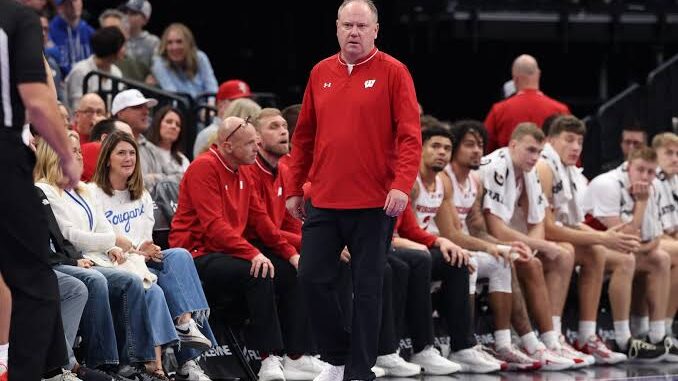
Wisconsin Badgers head coach Greg Gard has never been shy about speaking his mind when it comes to the state of college basketball, and his latest stance places him squarely in the middle of an increasingly important national conversation. As debates continue to swirl around player workload, academic balance, and the evolving priorities of college athletics, Gard has voiced his support for rethinking and possibly reshaping the current college basketball schedule—a move he believes could benefit programs, players, and the sport as a whole.
Gard’s position comes at a time when the college basketball landscape is undergoing significant transformation. From NIL opportunities to transfer portal surges, much of the sport has shifted dramatically over the last several years. Yet one area that has remained largely unchanged is the calendar itself. For Gard, that’s a problem worth solving. He believes the sport’s current timeline is no longer aligned with the realities of modern college athletics, and he sees a strong case for exploring new approaches.
One of the biggest concerns coaches frequently raise is the overlap between college basketball and college football. The early portion of the basketball season, particularly November and early December, often gets overshadowed by football’s final regular-season stretch, conference championships, and the beginning of bowl season. Gard has hinted that moving the start of the season back—perhaps to early December or even January—could give college basketball a more defined space in the sports calendar. That shift, he argues, could amplify interest and bring more national attention to early-season matchups that currently struggle for visibility.
Another element motivating Gard’s support for schedule adjustments is player welfare. The fall semester is traditionally the busiest academic period for student-athletes, who juggle preseason preparation, nonconference games, and travel commitments while still acclimating to their courses. A later start could theoretically provide a more manageable academic-athletic balance for players, ensuring they aren’t overloaded during one of the toughest academic stretches of the year. For Gard, who has consistently emphasized the importance of education, this consideration only strengthens the case for change.
Shifting the schedule could also lead to higher-quality basketball. Coaches across the country often note that early-season games arrive before teams have fully established chemistry or rotations. A delayed start would allow more practice time and create a product that is sharper from the outset. Gard believes this could elevate the level of play and increase fan engagement, particularly for marquee early matchups.
Of course, any significant schedule change would require coordination across conferences, TV networks, and the NCAA—entities not known for embracing bold shifts without extended debate. The financial implications of moving the season are vast, and stakeholders would need to evaluate how such changes affect revenue distribution, ratings, and sponsorships. Gard understands these challenges but maintains that the conversation is worth having, especially in a college sports world that has already proven its capacity for major reform.
What is clear is that Greg Gard’s willingness to publicly support a reevaluation of the college basketball schedule adds a respected voice to a discussion that has been simmering for years. As the sport continues adapting to new realities, Gard’s perspective reinforces the idea that tradition alone is not a sufficient reason to keep things the same. Whether or not sweeping changes arrive soon, his comments signal growing momentum toward a future where college basketball might operate under a calendar better suited for today’s athletes and audiences.
Be the first to comment