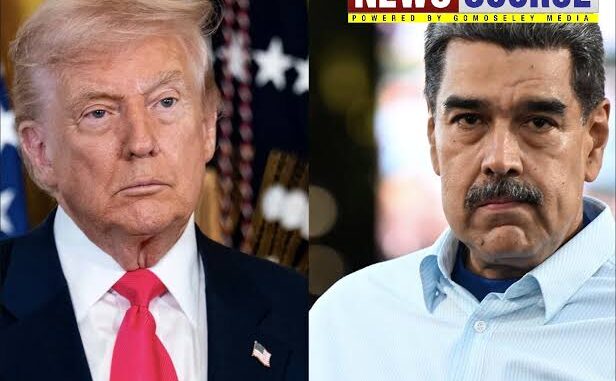
U.S. president Donald Trump has once again sparked international controversy after declaring that the United States would “run” Venezuela until a “safe transition can take place,” should he return to power. The remarks, delivered during a campaign-style address to supporters, immediately reignited debate over U.S. interventionism, sovereignty, and Washington’s long-standing involvement in Latin American politics.
Trump framed his comments as part of a broader vision to restore stability and democracy in Venezuela, a country that has endured years of political turmoil, economic collapse, and humanitarian crisis. According to Trump, the United States would step in to oversee governance temporarily, arguing that Venezuela’s institutions are too weak to guarantee a credible transition on their own. He claimed such involvement would be “short-term” and focused on security, economic recovery, and organizing what he described as “real, free elections.”
The statement marks one of Trump’s most explicit endorsements of direct foreign oversight in the region, going beyond previous U.S. policies that relied primarily on sanctions, diplomatic pressure, and recognition of opposition leaders. During his presidency, Trump took a hardline stance against President Nicolás Maduro, repeatedly labeling his government illegitimate and imposing sweeping economic sanctions aimed at forcing political change.
Critics were quick to condemn the remarks, warning that they echo a history of U.S. interventions in Latin America that often produced instability rather than democratic outcomes. Analysts noted that the language of “running” another sovereign nation risks alienating regional partners and strengthening anti-American sentiment. Several commentators argued that such rhetoric could undermine opposition forces within Venezuela by allowing the Maduro government to portray them as puppets of Washington.
Democratic lawmakers and foreign policy experts also questioned the legality and feasibility of Trump’s proposal. Any attempt by the United States to administer another country would face enormous legal hurdles under international law and would likely require multilateral backing, which appears unlikely. “This isn’t how transitions work in the modern international system,” one former diplomat noted, adding that even humanitarian interventions typically involve international coalitions, not unilateral control.
Supporters of Trump, however, defended the comments as tough but necessary. They argue that Venezuela’s prolonged crisis has destabilized the wider region, fueling mass migration and organized crime networks that ultimately affect the United States. From this perspective, a more assertive approach is seen as a means of restoring order and preventing further regional spillover.
In Venezuela, state media swiftly denounced Trump’s remarks as imperialist and hostile, with government officials accusing the U.S. of seeking control over the country’s vast oil reserves. Pro-government voices used the statement to rally nationalist sentiment, portraying Washington as a threat to Venezuelan sovereignty.
The comments come at a sensitive time, as Venezuela navigates fragile negotiations between the government and opposition, with international actors attempting to encourage incremental political reforms. Observers warn that inflammatory rhetoric from U.S. political figures could complicate these efforts and harden positions on all sides.
Ultimately, Trump’s declaration underscores how Venezuela remains a potent symbol in U.S. domestic politics, often used to project strength abroad and contrast political ideologies at home. Whether the remarks translate into actual policy remains uncertain, but they have already reignited global debate over the limits of U.S. power—and the enduring consequences of intervention in the affairs of another nation.
Be the first to comment