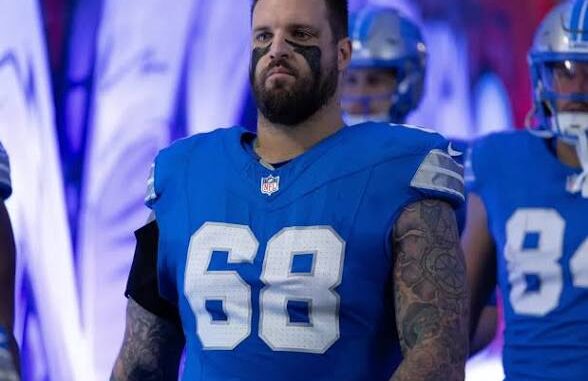
Veteran offensive lineman Taylor Decker has opened up about a growing rift with the Detroit Lions, shedding light on how a breakdown in communication strained what had long appeared to be a stable relationship between player and franchise. Decker, a cornerstone of the Lions’ offensive line for nearly a decade, did not hold back when describing the frustrations that ultimately led to tension behind the scenes.
According to Decker, the issue was not rooted in money or performance, but rather in a lack of transparency and consistent dialogue from the organization. For a player who has given years of service and leadership, the absence of clear communication felt like a breach of trust. He emphasized that in professional sports, where careers can shift overnight, honest conversations are essential—not just for contract negotiations, but for mutual respect.
The veteran tackle explained that there were moments when he felt “left in the dark” regarding key decisions that affected his role and future with the team. Whether it was discussions about roster planning, long-term strategy, or even his standing within the organization, Decker suggested that the silence from management created unnecessary uncertainty. For someone accustomed to being a team leader, that uncertainty proved difficult to accept.
This situation is particularly surprising given Decker’s long-standing importance to Detroit. Since being drafted in the first round, he has been a consistent presence on the offensive line, protecting quarterbacks and anchoring one of the team’s most improved units in recent seasons. His leadership in the locker room has also been widely recognized, making the reported disconnect even more unexpected.
Decker acknowledged that disagreements between players and teams are not uncommon in the NFL. However, he stressed that the manner in which those disagreements are handled can define the outcome. In his view, proactive communication could have prevented the situation from escalating into a rift. Instead, what might have been a manageable difference in perspective turned into a more significant issue due to prolonged silence.
From the team’s perspective, organizations often balance multiple priorities, including salary cap considerations, future roster construction, and internal evaluations. Still, Decker’s comments highlight the human side of the business—players want to feel valued and informed, especially when they have invested years into a franchise.
Despite the tension, Decker did not completely shut the door on reconciliation. He made it clear that he still holds respect for the organization and its fans, and that his primary focus remains on performing at a high level. However, he also signaled that moving forward, improved communication would be essential to repairing the relationship.
The situation serves as a reminder of how quickly dynamics can shift in professional sports. Even in a team on the rise like the Lions, internal issues can emerge if communication breaks down. For Detroit, addressing Decker’s concerns may not only help mend this particular relationship but also reinforce trust within the locker room.
Ultimately, Decker’s candid remarks provide insight into the often unseen challenges players face off the field. While fans focus on game-day performances, the reality behind the scenes is shaped by conversations—or the lack thereof. In this case, it appears that silence spoke louder than words, leading to a rift that both sides must now work to resolve.
Be the first to comment