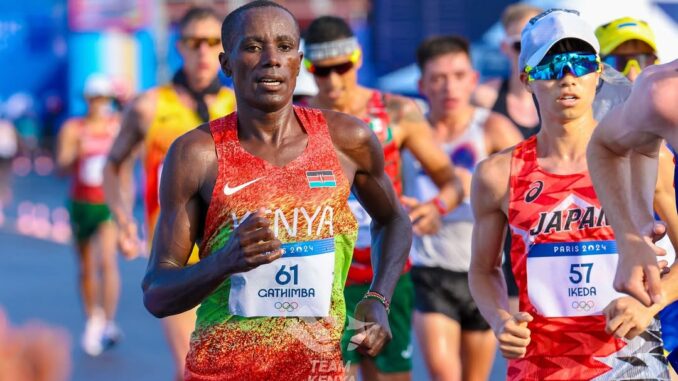
Kenya is preparing to make a decisive statement in race walking as it plots a bold offensive ahead of a highly anticipated showdown with Brazil. Long celebrated for its dominance in middle- and long-distance running, Kenya has increasingly turned its attention to race walking—a discipline that demands endurance, technical precision, and mental resilience. With Brazil emerging as one of the global powerhouses in the event, the upcoming clash represents both a test and an opportunity for Kenya to redefine its competitive identity on the world stage.
In recent years, Kenyan athletics officials have invested heavily in expanding the country’s footprint beyond its traditional strongholds. Race walking has been identified as a discipline where strategic planning and disciplined execution can quickly close the gap with established nations. Training camps have been intensified, coaching expertise upgraded, and athlete development pathways refined. The goal is clear: arrive at the Brazil showdown not merely to compete, but to dictate the tempo and challenge for top honors.
Kenya’s approach is being described as “bold” for good reason. Rather than adopting a conservative, reactive strategy, the team plans to push the pace early and apply sustained pressure throughout the race. This offensive mindset is designed to disrupt Brazil’s rhythm, particularly their tendency to control races through steady, metronomic pacing. Kenyan coaches believe that by injecting surges and tactical variation, they can force errors, draw penalties, or expose fatigue among their rivals.
At the heart of this strategy is a new generation of Kenyan race walkers who combine raw endurance with improved technical discipline. Historically, one of the challenges Kenyan athletes faced in race walking was consistency in technique, particularly under fatigue. However, recent international competitions have shown marked improvement. Judges’ reports have been encouraging, and athletes have demonstrated the ability to maintain legal form deep into races—an essential factor against a technically polished Brazilian team.
Brazil, meanwhile, enters the showdown with confidence and pedigree. Their race walkers are known for their composure, experience, and ability to perform under pressure, especially in high-stakes environments. Competing against such a seasoned opponent has sharpened Kenya’s focus. Training simulations now include race scenarios modeled on Brazilian tactics, from controlled early phases to late-race accelerations. The intention is to ensure Kenyan athletes are mentally prepared for every possible twist.
Beyond medals, the significance of this showdown runs deeper for Kenya. A strong performance would signal the country’s arrival as a serious contender in race walking and reinforce its broader ambition to diversify its athletics success. It would also inspire younger athletes at home to view race walking as a viable and prestigious pathway, strengthening the talent pipeline for years to come.
As the Brazil showdown approaches, the mood in the Kenyan camp is one of quiet confidence mixed with determination. There is respect for the opponent, but no fear. Kenya understands that breaking new ground requires courage, innovation, and belief. By plotting a bold race walk offensive, the nation is not just preparing for a single competition—it is making a statement about its future direction in global athletics. Whether the strategy delivers immediate glory or valuable lessons, one thing is certain: Kenya is ready to walk boldly into a new era.
Be the first to comment