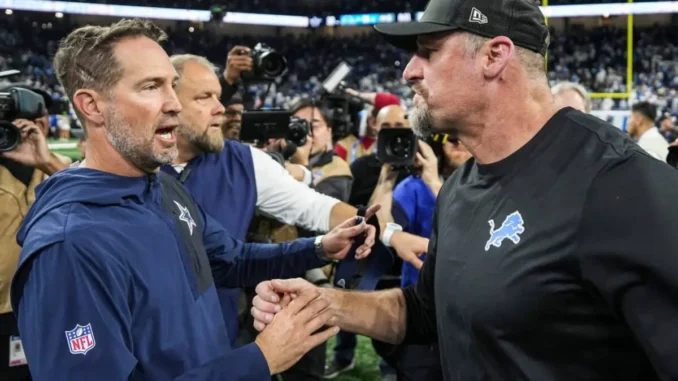
The phrase “Got them on video” has been trending across NFL social media since Thursday night’s showdown between the Dallas Cowboys and the Detroit Lions — a match that finished 44–30 in favour of Detroit, but may now be remembered more for its officiating controversy than for the on-field action.
Late in the fourth quarter, with the Cowboys trailing 37–27 and driving into the red zone, a seemingly innocuous pass to tight end Jake Ferguson drew a flag. Replays showed Ferguson using a clean “swim” move around Detroit linebacker Alex Anzalone, only for Anzalone to then grab him — a textbook defensive pass-interference scenario. Instead, the officials penalized the Cowboys for offensive pass interference, wiping out a crucial chance at a touchdown.
On the live broadcast, even veteran commentators balked. Color-commentator Kirk Herbstreit initially assumed the foul was on Anzalone, not Ferguson. Meanwhile, former referee and current analyst Terry McAulay — speaking for Prime Video — was blunt: “I don’t see offensive pass interference at all.”
The fallout was instant. Clips of the play flooded social media, shared widely in slow-motion and analyzed frame by frame. Fans, pundits, and former players were almost unanimous in calling the call inexplicable, outrageous — some even calling it “rigging.”
One of the most scathing post-game reactions came from retired quarterback Chase Daniel, who wrote on X that the referees were “really trying to keep the Cowboys out of the playoffs.” He went on to admonish officials: “We have a serious officiating problem.”
Even supporters of Dallas — who are often accused of exaggerating referee bias — have been stunned by this call. For many, this moment wasn’t just a blown call; it represented a broader breakdown in accountability and fairness. One fan summed up the sentiment with brutal clarity on a popular NFL subreddit:
> “The refs control the NFL at this point.”
It’s not just the one call. Observers pointed out additional questionable officiating throughout the game: missed offsides calls, a reversed safety call, and a general pattern of inconsistencies that disproportionately harmed Dallas.
Given all this, “Got them on video” has become a rallying cry — part lament, part demand for accountability. For many critics, the video evidence isn’t just compelling, it’s damning. It raises uncomfortable questions about the integrity of officiating in high-stakes NFL games, especially when playoff implications hang in the balance.
Whether the league will respond remains to be seen. But for now, that single frame — slow-motion, zoomed in, analyzed over and over — has done more to fuel outrage than any post-game press conference could.
Be the first to comment