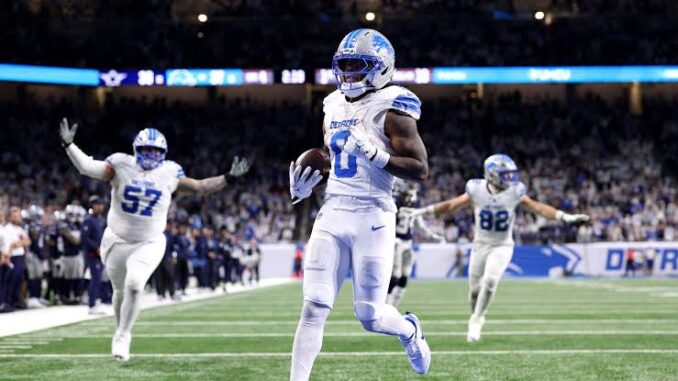
The Detroit Lions have made it clear over the past two seasons that they are building for sustained success, not just a fleeting playoff run. With a young core blossoming into one of the league’s most explosive groups, attention is now turning to the future of star running back Jahmyr Gibbs. League insiders increasingly expect the franchise to position him as the NFL’s highest-paid running back when extension talks intensify.
Gibbs has rapidly evolved from an electric rookie weapon into a foundational offensive centerpiece. His rare blend of breakaway speed, receiving ability, and improved between-the-tackles toughness has transformed Detroit’s offense into one of the most dynamic units in football. He is no longer just a complementary piece — he is a game-plan focal point who dictates defensive alignments and coverage schemes.
General manager Brad Holmes has never been shy about rewarding players he views as long-term cornerstones. Since arriving in Detroit, Holmes has emphasized drafting, developing, and retaining elite talent rather than overspending in free agency. If Gibbs is seen internally as a foundational star, history suggests the organization will not hesitate to reset the market at his position.
The debate around paying running backs premium money has intensified across the league in recent years. Many front offices have been reluctant to invest heavily at the position due to durability concerns and the perceived replaceability of production. However, Gibbs is not a traditional back. His impact mirrors that of multi-dimensional stars like Christian McCaffrey, who redefined positional value by serving as both a primary rusher and elite receiving threat.
Detroit’s coaching staff, led by Dan Campbell, places enormous value on versatility and explosiveness. Campbell has consistently praised Gibbs’ work ethic, football intelligence, and ability to change a game in a single snap. In crucial moments, the ball often finds its way into Gibbs’ hands — whether on outside zone runs, angle routes, screens, or split-back formations designed to create mismatches against linebackers.
Financially, making Gibbs the highest-paid running back would send a powerful message. It would signal that Detroit believes its Super Bowl window is wide open and that elite offensive playmakers deserve priority investment. The Lions are no longer a rebuilding team managing cap space cautiously; they are contenders seeking to maximize a championship-caliber roster.
Such a move would also reflect the broader shift in how elite dual-threat backs are evaluated. Gibbs’ receiving numbers rival those of top slot receivers, and his yards-after-catch ability creates explosive plays that tilt field position instantly. When defenses stack the box, he can motion wide. When they play nickel packages, he can punish lighter fronts. That adaptability makes him scheme-proof — a trait few backs possess.
Critics may argue that committing record-setting money to a running back carries inherent risk. Injuries and workload wear can shorten careers. But Detroit’s usage pattern has been relatively balanced, and the team’s strong offensive line reduces unnecessary punishment. By carefully managing touches and leveraging depth, the Lions can protect their investment while keeping Gibbs fresh deep into January.
Ultimately, the decision will come down to philosophy. Do the Lions follow conservative market trends, or do they define their own blueprint? Given their recent aggressiveness and confidence in their core, the expectation around the league is clear: if Gibbs continues on his current trajectory, Detroit will not merely pay him — they will set the standard.
And in doing so, they may reshape how elite, modern running backs are valued across the NFL.
Be the first to comment