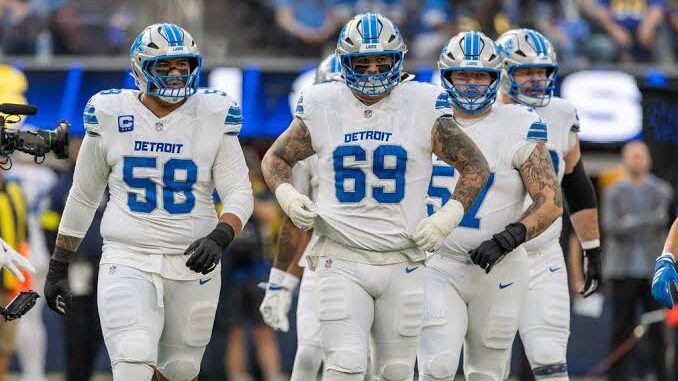
For a franchise built on toughness and physical identity, the Detroit Lions’ recent struggles up front have been impossible to ignore. Once viewed as a foundation of consistency, the offensive line has endured stretches of substandard play that disrupted rhythm, stalled drives, and placed unnecessary pressure on the rest of the offense. But if adversity reveals character, then this downturn may be serving an unexpected purpose — it has lit a fire under Tate Ratledge.
Ratledge arrived in Detroit with a reputation forged in the SEC trenches, where physicality is not optional but demanded. At Georgia, he was molded in a system that prized dominance, accountability, and relentless competition. That background has proven vital as the Lions search for answers up front. While some linemen shrink when standards slip, Ratledge has leaned into the challenge, using criticism as fuel rather than distraction.
The Lions’ offensive line issues have not stemmed from one single flaw. Missed assignments, inconsistent pass protection, and a lack of cohesion have all surfaced at various points. Those breakdowns have shown up most clearly in critical moments — third downs, red-zone possessions, and late-game drives where precision matters most. For a team with postseason aspirations, those mistakes have been costly.
Rather than pointing fingers, Ratledge has embraced responsibility. Teammates and coaches alike have noted his increased vocal presence, sharper attention to detail, and heightened urgency in preparation. Practices have taken on a different tone for him, with every rep treated as a chance to reset the standard. The message is clear: if the line is going to regain its edge, it starts with accountability from within.
Ratledge’s response reflects the mindset that made him such a coveted prospect. He thrives on competition and demands excellence not just from himself but from those around him. When protection breaks down or running lanes disappear, he studies the tape relentlessly, searching for technical adjustments rather than excuses. That approach has begun to show results, as his individual play has trended upward even amid collective struggles.
The Lions’ coaching staff has welcomed that intensity. Offensive line play is as much about mentality as mechanics, and Ratledge’s edge has injected energy into meeting rooms and walk-throughs. In a group where chemistry is essential, leadership does not always come from tenure — it comes from action. Ratledge’s willingness to confront uncomfortable truths has earned respect quickly.
This moment may prove pivotal not just for Ratledge, but for the entire unit. Substandard play can fracture confidence, but it can also galvanize a group determined to reclaim its identity. The Lions have long prided themselves on winning in the trenches, and Ratledge embodies that ethos. His fire reflects a refusal to accept mediocrity, even when circumstances test resolve.
Ultimately, the Lions’ offensive line will be judged by how it responds, not how it stumbled. If the recent struggles serve as a catalyst rather than a ceiling, Detroit could emerge stronger for it. Tate Ratledge’s reaction suggests that transformation is already underway. What began as frustration has become motivation — and for a team searching for consistency, that spark may be exactly what the Lions needed.
Be the first to comment