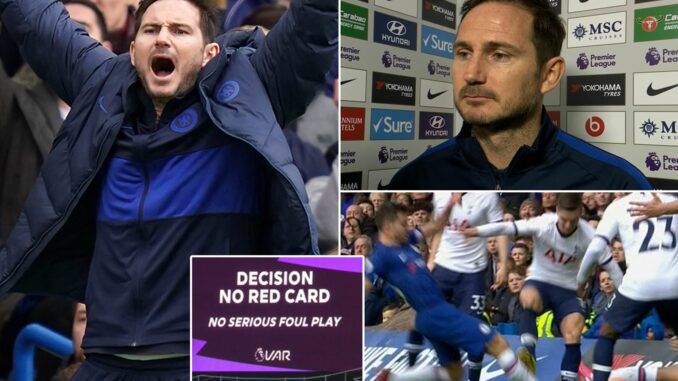
When Frank Lampard exploded after his side’s 3–0 defeat to Ipswich Town, he carried more than just the bitterness of losing — he carried the sense of a monumental injustice. As reported by Sport Witness, Lampard was scathing of the referee’s decision to allow Ipswich’s George Hirst to stay on the pitch, despite what he described as a clear second-bookable offence.
At the heart of the fury: Hirst, already walking on a yellow card, ignored the whistle that flagged him offside — and proceeded to shoot. The referee, Paul Tierney, chose not to brandish a second yellow. As Lampard fumed, “Josh does it and gets a yellow. … Hirst … shoots anyway – exactly the same situation. It should have been a red card.” For Lampard, that decision was not a marginal call — it was a “catastrophic mistake” that effectively altered the course of the match.
It is easy to understand his anger. Coventry City had started well; Lampard praised his players’ first-half performance, claiming they were “organised, aggressive, winning battles.” In his view, they deserved more. Instead, Ipswich struck just before the break through a strike by Sindre Walle Egeli, then Hirst added the second on the hour mark, and a late goal by substitute Ivan Azon sealed the dominant win.
The implications go beyond just one goal or one result. Lampard’s retort — “We were cheated!” — echoes a broader frustration many teams and fans share: the sense that referees’ inconsistent decision-making can heavily tilt outcomes in football. A yellow card for one offence, a pass for the same offence moments later — when consistency is not maintained, trust in fairness evaporates.
From a managerial perspective, Lampard tried to salvage dignity from the defeat. He insisted Coventry should not lose faith in themselves, despite a heavy scoreline against their name. “I hate losing, especially 3–0, but I’m proud of how we approached it … Circumstances went against us,” he said. The narrow margin between a fair contest and a one-sided defeat was — in his opinion — decided not on the field but by a misjudged decision off it.
For neutral observers, the incident raises serious questions about the consistency and integrity of officiating in high-stakes games. When referees apply different standards to similar offences, the consequences can change entire matches — or even seasons. Lampard’s reaction reflects something many in football resent: that sometimes the referee, not the opposition, becomes the match-winner.
In the post-match atmosphere, Coventry’s squad — and their fans — were left to wrestle not only with the result, but with a painful “what if.” What if Hirst had been sent off? What if the game had been played 10-vs-11 from that moment? Could Coventry have held firm? Taken advantage? The questions now linger, and the sense of grievance cuts deep.
Lampard’s message couldn’t have been clearer: “It’s a red card! We were cheated!” Whether or not the governing bodies take note, for the manager and his players, this is not just about one game — it is about a principle. And until such mistakes stop being catastrophic and start being corrected, the chants of injustice may only grow louder.
Be the first to comment