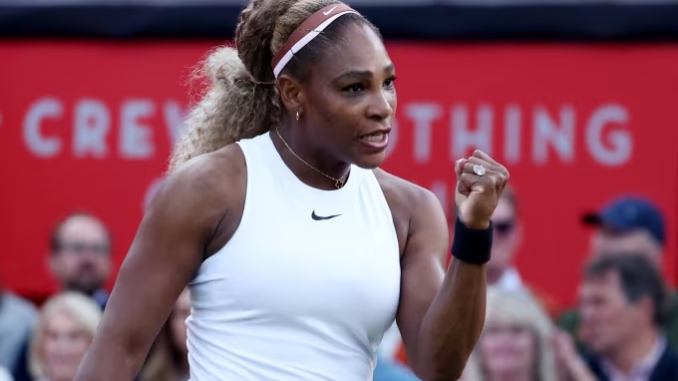
For years, tennis fans wondered whether they would ever see Serena Williams walk onto a professional court again. The 23-time Grand Slam champion stepped away from the sport in 2022, leaving behind a legacy that had already secured her place among the greatest athletes in history. Yet on a memorable day at the HSBC Championships at Queen’s Club in London, Serena made her long-awaited return, and tennis suddenly felt complete again.
At 44 years old, Williams arrived not as a player chasing records or rankings but as a sporting icon eager to compete once more. The excitement surrounding her comeback was unlike anything the tournament had experienced in recent years. Fans packed the stands, media attention intensified, and fellow players spoke openly about the privilege of sharing a court with one of the sport’s most influential figures.
Serena’s return came in doubles competition, where she teamed up with Canadian rising star Victoria Mboko. The partnership represented a fascinating blend of generations. On one side stood Williams, whose dominance defined an era of women’s tennis. On the other was Mboko, one of the brightest young talents hoping to make her own mark on the sport.
From the moment Williams stepped onto the court, it was clear that this was more than just another match. The crowd erupted as she emerged from the tunnel, creating an atmosphere rarely seen outside Grand Slam finals. Every movement was greeted with cheers, every winner celebrated as though it were a championship point.
What stood out most was that Williams did not look like a player returning after four years away. While some rust was inevitable, her competitive instincts remained sharp. Her powerful serve, aggressive groundstrokes, and trademark determination were still evident. She moved with confidence and displayed the fighting spirit that made her one of the most feared competitors in tennis history.
The significance of her comeback extended beyond the result on the scoreboard. Serena has always represented something bigger than tennis. Throughout her career, she broke barriers, inspired millions, and transformed perceptions of what athletes—particularly women—could achieve. Her success transcended sport, making her a global cultural figure whose influence reached far beyond the court.
For younger players, her return offered a reminder of the standards that helped shape the modern game. Many current professionals grew up watching Williams dominate Grand Slam tournaments, and several have credited her as their biggest inspiration. Seeing her compete again connected different generations of tennis in a unique and powerful way.
The sport itself also benefited from her presence. Few athletes in any discipline command attention like Serena Williams. Her return generated headlines around the world, drawing casual fans back to tennis and introducing new audiences to the game. The buzz surrounding Queen’s Club demonstrated that her star power remains as strong as ever.
Whether this comeback leads to additional tournaments or remains a special one-off appearance, the impact was immediate. Tennis welcomed back one of its greatest champions, and the excitement was unmistakable.
On the day Serena Williams returned, the sport gained more than a player. It regained a symbol of excellence, resilience, and inspiration. For fans who had missed her presence, it felt like welcoming home a hero—and tennis was better for it.
Be the first to comment