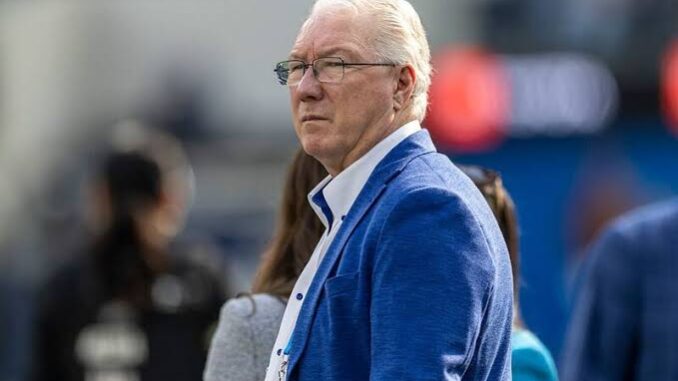
The Detroit Lions are preparing for a significant leadership transition following the announcement that Rod Wood will retire as president and CEO. Wood, who has been a central figure in the franchise’s business operations for nearly a decade, leaves behind a legacy defined by financial stability, organizational restructuring, and a renewed sense of professionalism off the field.
Wood joined the Lions in 2015, stepping into a role that required both corporate discipline and sensitivity to the traditions of one of the NFL’s oldest franchises. Working closely with principal owner and chairwoman Sheila Ford Hamp and the Ford family, Wood was tasked with modernizing the club’s internal structure while maintaining its deep roots in Detroit. His background in finance proved invaluable, especially during periods when the franchise faced on-field struggles and needed steady leadership behind the scenes.
One of Wood’s most notable contributions was strengthening the Lions’ financial foundation. Under his watch, the organization improved operational efficiency and positioned itself as a stable, forward-thinking NFL business. This included investments in Ford Field, enhancements to fan engagement strategies, and expanded corporate partnerships. His steady guidance ensured the franchise remained competitive in an increasingly commercialized league environment.
Wood also played an important role during transitional football periods. While general managers and head coaches often command the headlines, the president and CEO oversees broader strategy and ensures alignment between ownership and football leadership. During the hiring of key figures in recent years, Wood was instrumental in facilitating a collaborative environment that allowed the football department to focus on building a competitive roster.
The timing of his retirement comes as the Lions enjoy renewed optimism. After years of rebuilding, the franchise has re-established itself as a playoff contender and rekindled enthusiasm among its fanbase. That momentum off the field mirrors Wood’s long-term approach: patient investment, calculated risk, and a belief that stability breeds success. His departure, therefore, marks the end of an era defined more by steady progress than dramatic overhaul.
Within league circles, Wood has been respected for his measured leadership style. He often operated away from the spotlight, preferring results over rhetoric. That low-profile approach suited Detroit, a city that values hard work and resilience. Colleagues have frequently described him as pragmatic and detail-oriented, someone who understood that sustained growth requires disciplined management as much as bold ambition.
For the Lions, the next step will be identifying a successor who can continue that trajectory. The NFL landscape is evolving rapidly, with expanding media rights, global initiatives, and technological innovation shaping the business of football. The incoming president and CEO will need to balance commercial expansion with the franchise’s competitive ambitions on the field.
Wood’s retirement also provides an opportunity to reflect on how far the organization has come during his tenure. When he arrived, the Lions were seeking direction and consistency. Today, they are viewed as one of the league’s more stable operations, both financially and structurally. That transformation did not happen overnight, and while football results often dominate headlines, the business framework Wood helped build has been foundational.
As he steps away from the role, Rod Wood leaves behind a franchise better positioned for sustained success. His tenure may not have been defined by dramatic headlines, but it was marked by steady progress, careful stewardship, and an unwavering commitment to strengthening the Detroit Lions from the inside out.
Be the first to comment