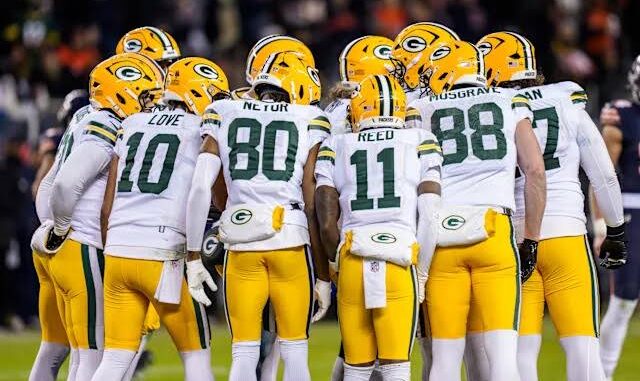
With the 2026 NFL Draft in the books, the Green Bay Packers now turn their attention to shaping a balanced and competitive 53-man roster. General manager Brian Gutekunst once again focused on youth, versatility, and long-term upside, creating fierce competition across multiple position groups. Here’s a projection of how the Packers’ depth chart could look heading into the new season.
At quarterback, Jordan Love remains the undisputed starter after continuing to establish himself as the franchise leader. Behind him, the Packers are likely to keep two backups, with a young developmental option competing with a more experienced reserve for the QB2 role. The team values stability here, but also wants upside in case of emergencies.
The running back room should feature a blend of power and explosiveness. The lead back role appears secure, but the draft addition of a versatile runner—capable of contributing both on the ground and as a pass-catcher—adds a new dimension. Expect Green Bay to carry three running backs, possibly four if special teams value becomes a deciding factor.
At wide receiver, competition is intense. The Packers have built one of the youngest receiver corps in the league, and the 2026 draft only reinforced that trend. With several players capable of stretching the field and others excelling in route-running, the team will likely keep six receivers. Versatility and chemistry with Love will determine the final spots, while special teams contributions could give fringe players an edge.
Tight end is another intriguing group. Green Bay has invested heavily in the position in recent years, and that depth should allow them to carry three tight ends. A primary pass-catching option will headline the group, supported by a strong in-line blocker and a hybrid player who can move across formations.
On the offensive line, depth and flexibility are key. Injuries have tested the Packers in past seasons, so expect them to keep at least nine offensive linemen. The starting five may already be in place, but the real battle will be among backups who can play multiple positions. Rookies drafted this year could play a crucial role if they adapt quickly to the NFL level.
Defensively, the Packers continue to emphasize speed and aggression. The defensive line rotation should include five to six players, blending experienced starters with younger prospects who can provide energy off the bench. Edge rusher remains a premium position, and Green Bay is expected to carry four specialists who can consistently pressure opposing quarterbacks.
At linebacker, the Packers may keep five players, prioritizing versatility. Modern defenses demand linebackers who can stop the run, cover tight ends, and even rush the passer when needed. The draft class likely adds competition here, pushing veterans to elevate their performances.
The secondary is perhaps the most competitive unit. With a mix of established starters and promising young talent, Green Bay could carry up to 10 defensive backs. Cornerbacks with strong coverage skills and safeties who can play both deep and in the box will be essential in defensive coordinator schemes.
Finally, special teams rounds out the roster with a kicker, punter, and long snapper. While these positions often go under the radar, consistency here can make a significant difference over a full season.
Overall, the Packers’ projected 53-man roster reflects a team building for both the present and future. The 2026 draft class has injected fresh energy into the squad, ensuring that competition will be fierce throughout training camp. Decisions won’t be easy, but that’s a good problem to have for a team aiming to contend.
Be the first to comment