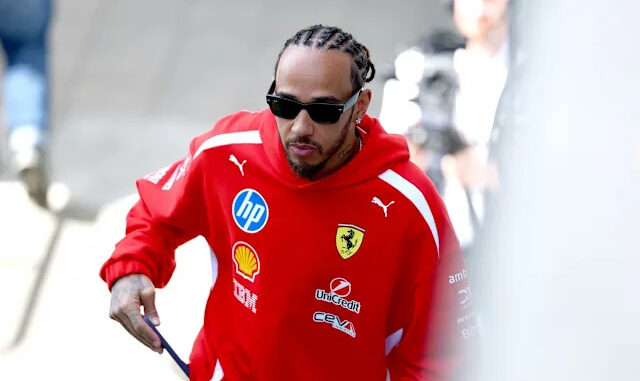
Seven-time world champion Lewis Hamilton has cast doubt over Ferrari’s latest round of upgrades following a challenging Japanese Grand Prix weekend, where Mercedes-AMG Petronas Formula One Team reasserted its authority at the front of the grid. The race at Suzuka Circuit highlighted a growing performance gap that has left Ferrari searching for answers despite its aggressive development push.
Ferrari arrived in Japan with optimism, introducing a series of aerodynamic and setup changes aimed at improving both straight-line speed and cornering stability. However, the results failed to match expectations. While the upgrades showed flashes of potential in practice sessions, they did not translate into consistent race pace. Hamilton, speaking after the race, suggested that Ferrari’s improvements may not be as significant as anticipated, especially when compared to Mercedes’ current form.
Mercedes, on the other hand, delivered a commanding performance that underlined their resurgence this season. With both cars demonstrating strong balance, tire management, and race pace, the team looked far more composed than in previous campaigns. Hamilton’s own performance was particularly notable, as he battled near the front and showcased the kind of consistency that has defined his career.
The contrast between the two teams was most evident during the race’s middle stint. Ferrari struggled with tire degradation and lacked the pace to challenge consistently, while Mercedes maintained competitive lap times and strategic flexibility. Hamilton pointed out that, in Formula One, upgrades are only as good as their ability to deliver results under race conditions—a benchmark Ferrari has yet to meet convincingly.
For Ferrari, the situation raises broader concerns about their development direction. Despite significant investment and effort, the team has often found itself unable to close the gap to its rivals when it matters most. The pressure is mounting on the Scuderia to not only bring updates but to ensure those updates deliver tangible gains on track.
Hamilton’s comments also reflect a deeper understanding of the competitive landscape. Having spent years battling at the highest level, he recognizes that marginal gains can define championship outcomes. His skepticism toward Ferrari’s upgrades is less about criticism and more about highlighting the ruthless efficiency required to succeed in modern Formula One.
Meanwhile, Mercedes’ performance in Japan signals a potential shift in momentum. After facing challenges in recent seasons, the team appears to have found a more competitive baseline. Their ability to extract performance from the car and execute race strategies effectively could position them as serious contenders moving forward.
Looking ahead, Ferrari must regroup quickly. The Formula One calendar leaves little room for complacency, and with rivals like Mercedes gaining strength, every race becomes increasingly critical. The team will need to analyze data from Suzuka, refine their upgrade package, and address the inconsistencies that have hindered their progress.
As the season unfolds, the battle between these iconic teams promises to intensify. Hamilton’s remarks serve as both a warning and a reminder: in Formula One, progress is measured not in promises, but in performance. For Ferrari, the challenge is clear—turn potential into results before the gap becomes too wide to close.
Be the first to comment