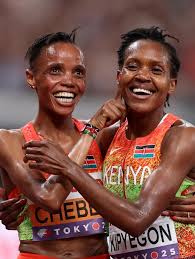
In the world of athletics, greatness is often measured by medals, records, and consistency at the highest level. By that standard, Beatrice Chebet has already secured her place among the elite. A double Olympic champion and World Champion, Chebet has demonstrated remarkable dominance, resilience, and tactical brilliance on the track and cross country circuit. Yet, despite these extraordinary achievements, her name does not always feature prominently in global sports award conversations. The question is simple but powerful: what more does she need to do?
To understand the contrast, one can look at Faith Kipyegon, another phenomenal Kenyan athlete whose achievements have rightly earned her widespread global acclaim, including nominations for the Laureus World Sports Awards. Kipyegon’s dominance in middle-distance events, coupled with her record-breaking performances, has made her a household name in athletics. Her recognition is deserved—but it also highlights a broader issue: why are athletes like Chebet, who are equally dominant in their disciplines, not receiving the same level of visibility?
Part of the answer lies in the nature of long-distance and cross country running. These events, while physically grueling and tactically demanding, often do not capture mainstream global attention in the same way as sprints or high-profile track races. Athletes like Usain Bolt revolutionized sprinting by combining record-breaking performances with charisma and global appeal, making their events must-watch spectacles. In contrast, distance runners often operate in a quieter space, where consistency and endurance are celebrated more within the athletics community than by the broader public.
However, this explanation is not enough to justify the gap in recognition. Chebet’s accomplishments are not just impressive—they are historic. Winning multiple global titles in highly competitive fields requires not only physical excellence but also mental toughness and strategic intelligence. These are qualities that define sporting greatness, regardless of the event.
Another factor to consider is narrative. Global sports awards often favor compelling stories—comebacks, rivalries, or groundbreaking moments that capture public imagination. While Chebet’s career has been filled with excellence, it may not have been packaged or promoted in a way that resonates with global audiences. This raises important questions about media coverage, storytelling, and the role of international sports organizations in shaping recognition.
It is also worth noting the influence of global exposure and branding. Athletes who compete frequently in high-visibility events or who have strong personal brands tend to attract more attention. This does not diminish their achievements, but it does create an uneven playing field where recognition is not solely based on performance.
So, just how much more does Beatrice Chebet need to achieve? The honest answer is: she has already done enough. The issue is not a lack of achievement, but a gap in recognition systems that fail to consistently highlight excellence across all disciplines.
If global sports awards are truly meant to celebrate the best athletes in the world, then they must broaden their lens. They must ensure that dominance in any event—whether it’s the 1500 meters, the marathon, or cross country—is valued equally. Until then, conversations like this will remain necessary.
Because greatness should never have to shout to be seen.
Be the first to comment