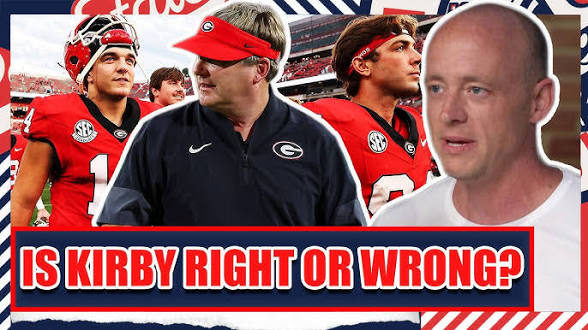
Josh Pate has weighed in on Kirby Smart’s recent comments comparing the SEC and Big Ten, adding another layer to one of college football’s most debated topics. Smart’s remarks quickly made headlines after he suggested the balance of power between the two conferences may be shifting, with the Big Ten gaining ground through expansion, television revenue, and national relevance.
For years, the SEC has been viewed as the gold standard in college football. National championships, elite recruiting classes, NFL draft picks, and dominant postseason performances helped build that reputation. Programs such as University of Georgia, University of Alabama, Louisiana State University, and others turned the conference into a powerhouse that many believed no league could match. But the landscape is changing rapidly.
The Big Ten has strengthened significantly in recent years. Traditional powers like Ohio State University and University of Michigan remain major forces, while the additions of University of Oregon, University of Southern California, University of California, Los Angeles, and University of Washington have expanded the league’s reach and depth. With enormous media rights deals and coast-to-coast exposure, the Big Ten now has resources that rival anyone in the sport.
That is where Pate’s reaction becomes important. The popular analyst has built a reputation for cutting through hype and focusing on substance. Rather than dismissing Smart’s comments as coach-speak, Pate reportedly acknowledged there is truth behind the concern. The SEC still owns the strongest recent track record, but the gap is no longer as wide as it once seemed.
Pate’s view reflects what many insiders believe: conference strength is no longer measured only by titles. Depth, scheduling difficulty, recruiting pipelines, NIL opportunities, television money, and playoff access all matter now. On several of those fronts, the Big Ten has surged forward.
Still, it would be premature to declare the SEC dethroned. Smart himself has built University of Georgia into one of the sport’s premier dynasties, winning championships and recruiting at an elite level. Nick Saban may be retired, but Alabama remains dangerous, while University of Texas at Austin and University of Oklahoma joining the SEC only adds more firepower.
What Smart may really be saying is that the SEC can no longer rely on its old reputation alone. The Big Ten’s rise means every edge must now be earned rather than assumed. That message likely resonates with coaches across the South who know the margins in recruiting and roster building are thinner than ever.
For fans, the debate is excellent news. A stronger Big Ten and a motivated SEC should create more blockbuster matchups, higher playoff stakes, and greater national interest. Instead of one league dominating the conversation, college football may finally be entering an era of genuine two-conference parity.
Pate’s response ultimately reinforces Smart’s point: the SEC is still elite, but the Big Ten is no longer chasing from far behind. It is now close enough to make the argument real—and close enough to win it on the field.
Be the first to comment