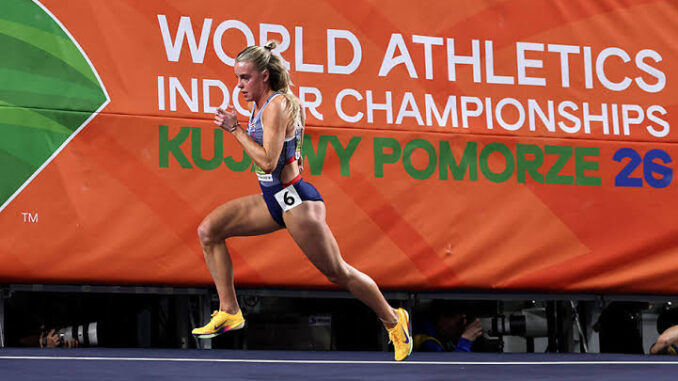
When Jenny Meadows speaks about the current state of British middle-distance running, there is a clear sense of pride and optimism. Much of that optimism is centred around one athlete: Keely Hodgkinson. Still early in her career, Hodgkinson has already reshaped expectations, not just with her performances on the track but with her mindset, professionalism, and consistency at the highest level.
Meadows, now a respected coach and mentor, understands better than most what it takes to compete in the fiercely demanding world of elite athletics. Having experienced the highs and lows of international competition herself, she recognizes something special in Hodgkinson—something that goes beyond raw talent. According to Meadows, the lessons emerging from Hodgkinson’s rise are influencing how athletes train, compete, and carry themselves.
One of the most striking elements of Hodgkinson’s success is her composure. Despite the pressure that comes with global attention, she has demonstrated an ability to deliver in major championships with remarkable consistency. For Meadows, this is not accidental. It reflects a new generation of athletes who are better prepared mentally, supported by stronger coaching structures, and more aware of what it takes to succeed on the world stage.
“We’re learning from Keely,” Meadows has suggested in various discussions, emphasizing that her approach is helping to redefine standards within the sport. It is not just about running fast times; it is about how those performances are built—through discipline, recovery, tactical intelligence, and emotional control. Hodgkinson’s development offers a blueprint for younger athletes who are watching closely and aiming to follow in her footsteps.
Another key takeaway Meadows highlights is Hodgkinson’s professionalism. From her training routines to her race-day execution, there is a level of detail that sets her apart. In modern athletics, where margins between victory and defeat are incredibly small, such precision can make all the difference. Meadows believes that this attention to detail is something British athletics can adopt more broadly.
Importantly, Hodgkinson’s influence extends beyond her immediate results. Her presence has raised the competitive standard within the UK, encouraging fellow athletes to push harder and aim higher. This ripple effect is something Meadows finds particularly encouraging, as it suggests long-term benefits for the sport. A strong leading figure often inspires depth, and Hodgkinson is clearly playing that role.
Meadows also points out that Hodgkinson’s journey has not been without challenges. Like any elite athlete, she has had to navigate injuries, expectations, and the pressure of maintaining peak performance. The way she has handled these challenges has added another layer to her influence. It shows younger athletes that success is not linear, and resilience is just as important as talent.
Looking ahead, Meadows believes that the lessons drawn from Hodgkinson’s rise will continue to shape British middle-distance running. Coaches are adapting their methods, athletes are raising their standards, and the overall culture is becoming more focused and ambitious.
In many ways, Hodgkinson represents both the present and the future of the sport. For Meadows, the message is clear: by studying and learning from her example, British athletics can continue to grow stronger.
Be the first to comment