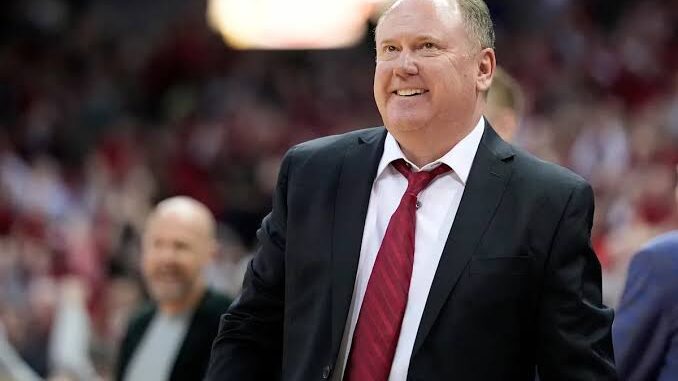
As college athletics continues to evolve in the era of Name, Image, and Likeness (NIL), Greg Gard has offered a clear and measured perspective on where the Wisconsin Badgers men’s basketball stand among their rivals in the Big Ten Conference heading into 2026. With NIL collectives and booster-backed initiatives reshaping recruiting and roster retention across the country, Gard’s comments reflect both realism and quiet confidence in Wisconsin’s approach.
Speaking recently about the program’s positioning, Gard acknowledged that Wisconsin is unlikely to sit at the very top of the Big Ten’s NIL hierarchy. Programs such as Michigan, Ohio State, and Michigan State have built extensive financial backing and aggressive NIL infrastructures that naturally give them an edge in attracting elite talent. However, Gard emphasized that success in this new landscape is not solely dictated by the size of a program’s NIL war chest.
Instead, Wisconsin is carving out a sustainable and strategic path. Gard pointed out that the Badgers will likely fall somewhere in the “upper-middle tier” of the conference when it comes to NIL resources. While that may not sound flashy, it reflects a program that prioritizes stability, development, and culture—qualities that have long defined Wisconsin basketball.
A key component of the Badgers’ NIL strategy is alignment. Rather than chasing high-profile recruits with massive one-time deals, Wisconsin has focused on building relationships with players who fit the program’s identity. This includes athletes who value development, team cohesion, and long-term growth alongside financial opportunities. Gard has repeatedly stressed that NIL should complement a player’s experience, not overshadow it.
Another advantage for Wisconsin lies in its structure and organization. The program has worked closely with its NIL collective to ensure that opportunities are distributed in a way that promotes team harmony. In an era where locker room chemistry can be disrupted by uneven financial arrangements, this balanced approach could prove to be a competitive advantage.
Gard also highlighted the importance of education in the NIL era. The coaching staff ensures that players understand how to manage their personal brands, make informed financial decisions, and maximize opportunities beyond the court. This holistic approach appeals to recruits and their families, particularly those who are thinking about life after basketball.
While some programs in the Big Ten may continue to dominate headlines with eye-catching NIL deals, Wisconsin is betting on consistency and culture. Gard believes that the Badgers can remain competitive by identifying the right players, developing them effectively, and supplementing that growth with meaningful NIL opportunities.
Looking ahead to 2026, the landscape will likely become even more competitive as NIL collectives grow and new regulations potentially emerge. However, Wisconsin’s steady approach positions them well to adapt without losing their identity. Gard’s message is clear: the Badgers may not lead the conference in spending, but they will continue to compete at a high level by staying true to their principles.
In a rapidly changing college basketball environment, that balance between tradition and innovation could be exactly what keeps Wisconsin firmly in the Big Ten conversation.
Be the first to comment