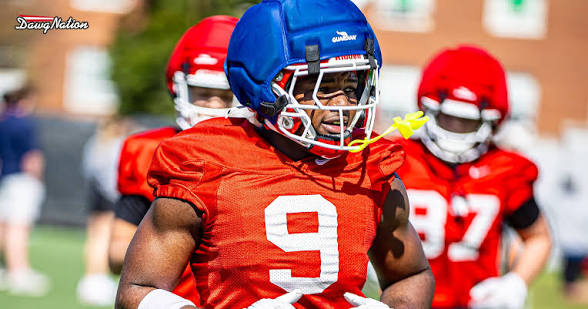
Spring practice always offers a first glimpse into what a college football team might become, but for Georgia Bulldogs fans this year, the intrigue goes beyond depth charts and position battles. Instead, much of the attention has shifted toward subtle but telling visual cues — blue caps on the practice field and a wave of new jersey numbers that hint at evolving roles within the roster.
Under head coach Kirby Smart, Georgia has built a reputation for precision and discipline, where even the smallest details carry meaning. The appearance of blue caps during spring sessions is one of those details. Traditionally used to signify non-contact status, the caps are often worn by quarterbacks or players recovering from minor injuries. This spring, however, their presence has sparked conversation as several key contributors have been spotted wearing them, suggesting a cautious approach to maintaining player health.
In a program that consistently competes at the highest level, managing wear and tear is critical. Georgia’s coaching staff appears focused on ensuring that its most valuable assets are protected ahead of a long season. The blue caps, while seemingly minor, reinforce a broader strategy: keep players fresh, avoid unnecessary risks, and build depth by allowing younger athletes to take on more reps.
Alongside the blue caps, another noticeable change has been the reshuffling of jersey numbers across the roster. While number changes can sometimes be cosmetic, they often signal deeper shifts within a team. For Georgia, several players switching numbers this spring could indicate position changes, increased responsibility, or a desire to embrace a new identity.
For younger players, a new number can represent a fresh start — a chance to leave behind their recruiting profile and establish themselves as contributors. For veterans, it can mark a transition into leadership roles. In some cases, highly coveted numbers become available after departures to the NFL, and who inherits them can say a lot about how the coaching staff views a player’s potential impact.
These visual changes also provide fans and analysts with clues about position battles unfolding behind the scenes. A wide receiver taking on a single-digit number, for example, might suggest rising importance in the offensive scheme. Similarly, defensive players switching to more prominent numbers can hint at expanded roles in a unit expected to reload once again.
Spring practice is not just about installing plays; it’s about setting the tone. Every detail — from practice gear to jersey assignments — contributes to a culture that has made Georgia one of the dominant forces in college football. The Bulldogs are not rebuilding; they are retooling, and the subtle shifts seen this spring reflect that mindset.
Of course, the real answers will come in the fall when Georgia takes the field under the bright lights. But for now, the blue caps and new jersey numbers offer a fascinating window into a program that thrives on competition and constant evolution. They serve as reminders that success is built not only on talent, but on careful planning, adaptability, and attention to detail.
As spring continues, fans will keep watching closely — not just for big plays, but for the small signs that reveal who’s ready to step forward. At Georgia, even the smallest changes can speak volumes.
Be the first to comment