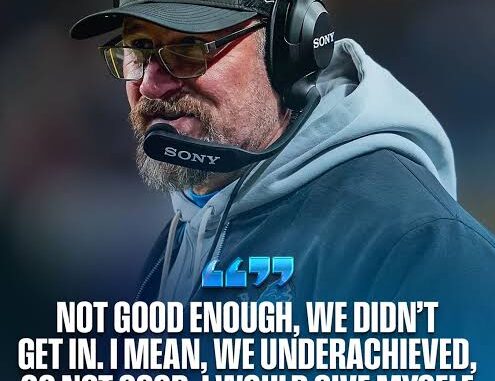
Dan Campbell’s blunt self-assessment at the close of the 2025 season caught many by surprise. Coming off back-to-back division titles and consecutive playoff appearances, most coaches would be content to hand themselves a passing grade, if not something far higher. Instead, the Detroit Lions head coach did what he has always done best—he told the unfiltered truth as he saw it. Giving himself “a freaking ‘F’” was not an act of false humility, but a revealing window into Campbell’s demanding standards and his belief that success is only meaningful if it leads to something greater.
On paper, the Lions’ recent résumé suggests stability and progress. Four straight winning seasons, sustained relevance in the NFC, and a locker room that clearly believes in its leadership are achievements that once felt unimaginable in Detroit. Campbell helped transform the franchise from a symbol of frustration into a tough, respected opponent that no one circles as an easy win. Division titles and playoff berths validated that rebuild. Yet, for Campbell, those milestones are no longer the destination—they are the baseline.
His frustration with the 2025 season stemmed from missed opportunities rather than outright failure. The Lions entered the year with championship expectations, not just playoff hopes. When a team reaches that level, close losses, execution errors, and moments of poor discipline loom larger than wins stacked in the standings. Campbell has consistently preached that details decide games in January, and when Detroit fell short of its ultimate goals, he internalized that disappointment.
What makes Campbell’s self-criticism notable is how it reflects his leadership style. He never publicly throws players or assistants under the bus. Instead, he absorbs blame and sets the tone from the top. By giving himself an “F,” he sent a clear message to the organization: standards are rising, and complacency will not be tolerated. Success in the regular season no longer earns praise if it does not translate into postseason breakthroughs.
There is also an emotional element to Campbell’s reaction. He coaches with visible passion, investing deeply in his players and the city he represents. That emotional buy-in magnifies both joy and disappointment. For Campbell, falling short hurts because he believes so strongly in what the Lions are capable of becoming. His words were less about anger and more about accountability—his own first and foremost.
From a broader perspective, Campbell’s comment may actually be a sign of a healthy franchise. Mediocre teams celebrate small victories. Great teams obsess over what they failed to do. By grading himself so harshly, Campbell reinforced the idea that Detroit’s window is open now, and anything less than maximizing it is unacceptable. That mindset aligns with organizations that sustain success rather than briefly taste it.
Ultimately, Dan Campbell’s “freaking ‘F’” was not a rejection of progress but a demand for evolution. Back-to-back division titles and playoff trips prove the Lions belong among the NFL’s contenders. What comes next will define Campbell’s legacy. If his self-criticism fuels sharper preparation, smarter decisions, and a deeper playoff run, then that failing grade may become one of the most important moments of the Lions’ rise—an acknowledgment that good is no longer good enough in Detroit.
Be the first to comment