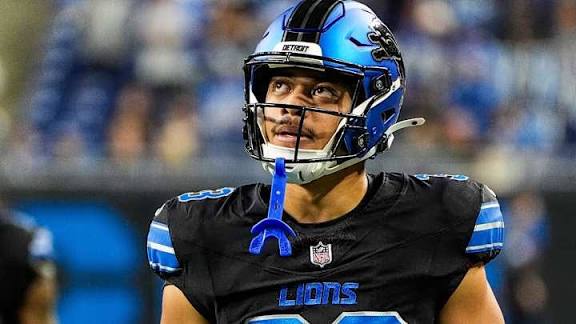
The departure of David Montgomery has naturally shifted attention to the Detroit backfield, but any assumption that the Lions’ backup running back is now secure would be premature. The Detroit Lions may have moved on from a key veteran presence, yet that doesn’t automatically guarantee stability or long-term security for the next man up.
Montgomery’s exit leaves both production and leadership to replace. He provided a physical, downhill presence that complemented the Lions’ offensive identity. His ability to grind out tough yards in short-yardage situations and close out games made him a trusted option for the coaching staff. With that role now vacant, opportunity certainly exists — but opportunity in the NFL is often accompanied by competition.
The Lions have built their recent success on depth and internal competition. Head coach Dan Campbell has consistently emphasized earning roles rather than being handed them. That philosophy doesn’t change simply because a roster spot opens up. If anything, it intensifies the scrutiny. A backup running back stepping into a larger workload will be expected to prove he can handle pass protection responsibilities, maintain ball security, and produce consistently between the tackles.
Financial considerations also play a role. Running back is one of the most replaceable positions in today’s NFL. Teams are increasingly willing to rotate fresh legs or invest mid-to-late-round draft picks rather than commit heavily to veterans. The Lions could easily add competition through the draft or free agency, especially if they believe the current depth chart lacks a true power complement or a reliable third-down option.
Another factor is scheme versatility. Detroit’s offense thrives when it can threaten defenses in multiple ways. A backup elevated to a more prominent role must demonstrate he can catch passes out of the backfield, execute screen plays effectively, and align in different formations. If he’s viewed as one-dimensional, defensive coordinators will adjust quickly, limiting his impact and potentially forcing the front office to explore alternatives.
Durability concerns cannot be ignored either. Increased touches often reveal whether a player can withstand the physical toll of a full season. A back who has primarily handled limited carries may struggle with consistency once defenses key in on him. The Lions’ offensive line remains a strength, but even elite blocking units can’t mask vision issues or hesitancy at the point of attack.
There’s also the locker room dynamic to consider. Montgomery brought experience and a competitive edge that resonated with teammates. Replacing that presence requires more than just statistical output. The coaching staff will be evaluating work ethic, practice habits, and leadership traits during offseason programs and training camp.
In short, Montgomery’s departure creates a pathway — not a promise. The backup running back may currently sit higher on the depth chart, but the NFL’s reality is unforgiving. Every roster spot is fluid until proven otherwise. Whether through draft additions, preseason battles, or strategic roster moves, the Lions are likely to ensure the position remains competitive.
For the backup hoping to seize the moment, the margin for error is slim. Production, versatility, and reliability will determine whether he secures a lasting role or finds himself fighting to remain on the roster by midseason. In Detroit, nothing is guaranteed — and that includes life after Montgomery.
Be the first to comment