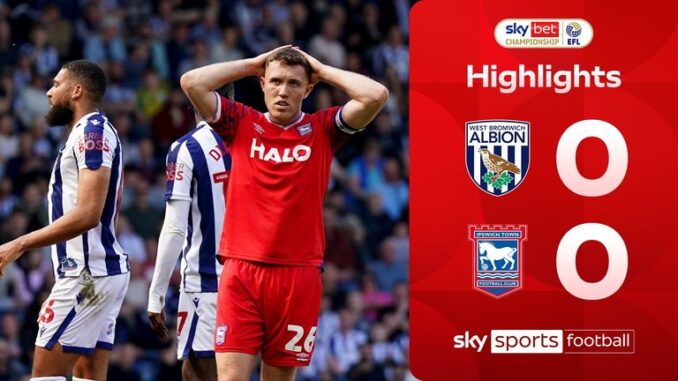
It was a game that promised intensity and carried significant implications in the Championship promotion race, but ultimately delivered a stalemate as West Bromwich Albion and Ipswich Town played out a goalless draw at The Hawthorns. From the perspective of journalist Stuart Watson, the result was one that left both sides with mixed emotions—frustration at missed opportunities, but also a sense of resilience in a tightly contested encounter.
Ipswich arrived with momentum and ambition, firmly in the hunt for promotion, while West Brom were equally motivated to solidify their own playoff credentials. The early stages reflected that urgency, with both teams pressing high and attempting to impose their style. However, as Watson notes, the game quickly settled into a pattern of caution, with neither side willing to overcommit and risk being exposed.
For Ipswich, there were glimpses of their attacking quality, particularly in transitions. Their movement in the final third was sharp at times, but the cutting edge was missing when it mattered most. Watson highlights that while Ipswich controlled spells of possession and showed composure on the ball, their inability to convert half-chances into clear opportunities ultimately cost them a chance to take all three points.
West Brom, on the other hand, approached the game with discipline and physicality. Defensively organized, they made it difficult for Ipswich to find space between the lines. Watson points out that their structure was one of the key reasons the match remained scoreless. The Baggies’ backline held firm under pressure, and their midfield worked tirelessly to disrupt Ipswich’s rhythm.
One of the defining aspects of the match, according to Watson, was the lack of clinical finishing from both sides. Chances were few and far between, but when they did arise, neither team showed the composure required to capitalize. Goalkeepers were rarely tested with anything truly threatening, which underscored the overall lack of attacking sharpness.
Watson also emphasizes the tactical battle between the two managers. It was a chess match rather than an all-out attacking spectacle. Both teams showed respect for each other’s strengths, leading to a cautious approach that prioritized defensive solidity over offensive risk. While this ensured a competitive contest, it also contributed to the lack of excitement in front of goal.
From a broader perspective, the result may have greater significance for Ipswich. Watson suggests that while a point away from home is not a poor outcome, matches like these—where chances to gain ground on promotion rivals are present—can prove pivotal over the course of a season. Dropped points, even in tight games, can accumulate and impact final standings.
For West Brom, the draw reinforces their reputation as a difficult team to break down. Watson notes that their defensive resilience is a valuable asset, particularly in high-stakes matches. However, questions remain about their ability to consistently create and finish chances, something that could limit their ambitions as the season progresses.
In conclusion, Stuart Watson’s verdict paints a picture of a game defined more by structure and caution than flair and finishing. While both West Bromwich Albion and Ipswich Town demonstrated qualities that underline their promotion aspirations, the lack of attacking decisiveness ultimately left them sharing the spoils.
Be the first to comment