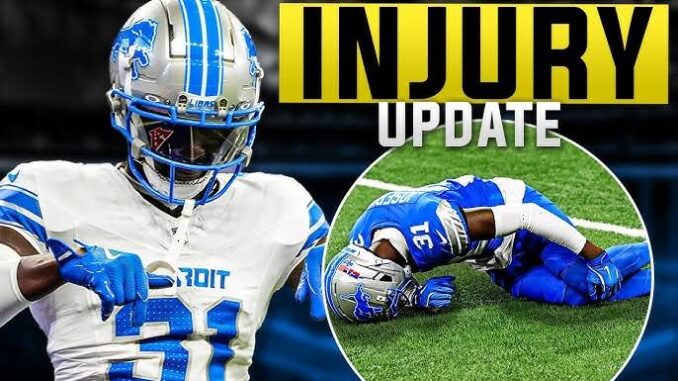
The Detroit Lions’ defense has been built on speed, physicality and instinct over the past two seasons, and few players embody that identity more than Kerby Joseph. So when news of a knee injury to the standout safety surfaced, it immediately raised concern — not just about his individual outlook, but about the ripple effect across a unit that leans heavily on his versatility.
Joseph has grown into one of the Lions’ most reliable defensive playmakers. His range in deep coverage, ball-hawking instincts and willingness to trigger downhill against the run have made him a central figure in Aaron Glenn’s scheme. Through the past two campaigns, he has consistently ranked among the team leaders in interceptions and passes defended, underlining his ability to flip games with a single read or break on the ball.
The nature and severity of any knee injury are critical variables. A minor sprain or inflammation issue could sideline him for only a short stretch, allowing Detroit to manage his snaps and prioritize long-term health. However, if structural damage is involved — such as ligament involvement — the timeline shifts dramatically, potentially threatening a significant chunk of the season. The Lions’ medical staff will be cautious, especially given Joseph’s explosive style of play, which relies on sudden changes of direction and closing speed.
From a tactical standpoint, Joseph’s absence would force adjustments. The Lions often deploy him in single-high looks, trusting his range to erase vertical threats. That trust allows the corners to play more aggressively underneath. Without him, Detroit may lean into more split-safety shells to protect the deep middle, which could alter their pressure packages and run fits.
Depth will be tested. Brian Branch’s versatility offers some flexibility — he can shift between nickel and safety responsibilities — but that domino effect weakens another layer of the defense. The Lions could rotate a combination of backups to cover early downs while limiting exposure in high-leverage passing situations. Communication becomes even more vital, as Joseph is one of the secondary’s vocal organizers pre-snap.
There is also the broader competitive context to consider. Detroit is operating in a championship window, and every defensive piece matters. A prolonged absence could influence trade deadline strategy or prompt the front office to explore veteran free-agent depth. The Lions have shown in recent years that they are willing to be proactive when opportunity aligns with need.
For Joseph personally, the next steps center on recovery discipline and mental resilience. Knee rehabilitation is as much about regaining confidence as restoring strength. Safeties depend on fluid hips and explosive breaks; any hesitation can be costly. The Lions’ training staff will likely implement a phased progression — controlled movement, position-specific drills, then full-contact reintegration — ensuring he returns at full capacity rather than rushing back at partial strength.
In the short term, Detroit must prioritize stability over splash. Minimizing coverage busts and maintaining structural integrity in the secondary will be key. Offensively, the Lions may need to shoulder more of the burden if the defense absorbs growing pains without its playmaking safety.
Ultimately, what’s next for Kerby Joseph depends on medical clarity. If the injury proves minor, the Lions can exhale and recalibrate. If it is more serious, Detroit’s depth, adaptability and championship ambitions will be tested. Either way, Joseph’s importance to this defense is undeniable — and his path back to full health will be one of the defining storylines for the Lions moving forward.
Be the first to comment