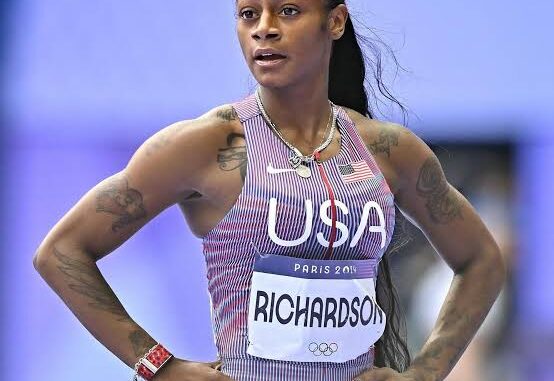
As the calendar flipped to 2026, Sha’Carri Richardson did not ease into the new year quietly. Instead, America’s self-styled “sprint queen” made three bold, high-risk decisions that have sent shockwaves through U.S. track and field. This is not a story about injuries slowing her down or age catching up with her. Richardson is still in her physical prime. What makes 2026 a make-or-break year is choice — deliberate, calculated, and controversial choice.
The first decision was a dramatic overhaul of her training environment. Richardson parted ways with key figures in her long-time support system, opting for a leaner, more private setup centered on performance rather than comfort. To some coaches, this was a necessary evolution. To others, it looked like an unnecessary gamble. Training groups offer stability, shared motivation, and proven systems — and walking away from that safety net is rarely encouraged at the elite level. Richardson, however, has never been one to follow convention. She believes total control over her preparation is the only way to unlock her best self in 2026.
Her second New Year move raised even more eyebrows: a selective, almost minimalist competition schedule. Instead of racing frequently to sharpen form and intimidate rivals, Richardson has chosen patience. Fewer meets. Longer training blocks. A clear focus on peaking at the biggest championships rather than dominating early-season headlines. Critics argue this approach risks rust and missed opportunities to test herself against rising global stars. Supporters counter that sprinting careers are often shortened by over-racing — and that this could be the smartest decision of her life. Either way, Richardson is betting that restraint, not exposure, will define her year.
The third and most polarizing decision was psychological rather than physical. Richardson has made it clear she is done performing for narratives she doesn’t control. She has tightened access to her inner circle, limited media engagement, and reframed how she presents herself publicly. For an athlete whose charisma and bold personality helped make her a global star, this shift is striking. Some fans see it as growth and maturity. Others worry she is distancing herself from the very energy that once fueled her performances. Inside the sport, the debate is fierce: does reducing external noise sharpen focus — or does it isolate an athlete when pressure peaks?
Taken together, these three decisions explain why 2026 feels so pivotal. Richardson is no longer the prodigy bursting onto the scene or the comeback story fighting for redemption. She is an established star making executive-level choices about her career. There is little room for excuses now. If the season ends with global medals and dominant sprinting, these moves will be hailed as genius. If not, they will be dissected as self-inflicted missteps.
What makes this moment so compelling is that Sha’Carri Richardson understands the stakes — and embraced them anyway. She is daring the sport to judge her not by past drama or personality, but by results. In a year loaded with pressure, she has chosen risk over comfort, control over convention, and long-term legacy over short-term applause.
Whether 2026 crowns her undisputed sprint queen or marks a turning point in another direction, one thing is undeniable: Sha’Carri Richardson didn’t play it safe. And that courage, just as much as her speed, is why the entire track and field world is watching.
Be the first to comment