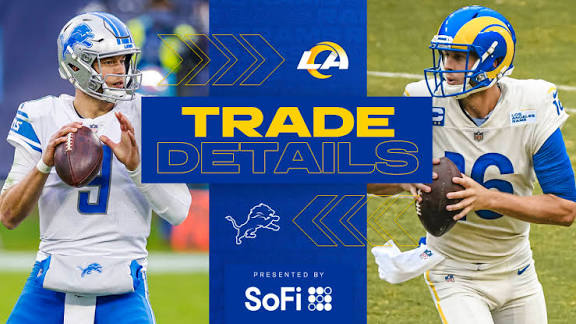
Five years after the blockbuster trade that sent Matthew Stafford from the Detroit Lions to the Los Angeles Rams in exchange for Jared Goff, draft picks, and a complete organizational reset, the NFL can finally take a long, balanced look at who truly won, who lost, and how the deal reshaped both franchises.
When the trade was completed in January 2021, it was clear both teams were chasing different goals. The Rams were all-in on winning immediately, while the Lions were beginning a long-overdue rebuild. In that sense alone, the trade accomplished exactly what it was supposed to do.
The Rams: short-term winners
From a pure results standpoint, the Rams are obvious winners. Stafford delivered what Los Angeles wanted most: a Super Bowl championship. His performance during the 2021 playoff run, capped by a title victory over the Bengals, validated the franchise’s aggressive “win now” philosophy. Stafford’s arm talent, toughness, and ability to make high-leverage throws elevated an already strong roster and pushed them over the top.
Even though injuries and roster turnover have followed since, banners last forever. For the Rams, one Lombardi Trophy justified the cost of two first-round picks and a starting quarterback. In the short term, there is no debate — Los Angeles achieved its ultimate goal.
The Lions: long-term winners
While Detroit endured early growing pains, the Lions may have quietly won the long game. Jared Goff was initially viewed as a bridge quarterback, but he reinvented his career under Dan Campbell and offensive coordinator Ben Johnson. Goff became a steady, confident leader and played some of the best football of his career, helping turn Detroit into a legitimate NFC contender.
More importantly, the draft picks acquired in the trade became foundational pieces. Those selections helped the Lions build a deep, young roster that now reflects toughness, discipline, and belief — traits Detroit had lacked for decades. The trade symbolized a philosophical shift, not just a roster move.
Detroit didn’t just trade a quarterback; they reset their identity. Five years later, that reset has paid off.
Matthew Stafford: personal winner
Stafford himself deserves recognition as a winner. After years of elite play without playoff success in Detroit, he finally earned the postseason moments his talent merited. Winning a Super Bowl secured his legacy and silenced critics who questioned whether he could win on the biggest stage.
However, injuries in subsequent seasons have limited his availability, raising questions about longevity. Still, from a career perspective, Stafford gained everything he was missing.
The losers: expectations and timing
If there is a “loser,” it’s less about teams and more about timing. The Rams sacrificed future flexibility, leading to thinner rosters in later years. Meanwhile, the Lions’ early struggles with Goff meant fans had to endure patience — something Detroit supporters had little of after decades of losing.
There’s also the emotional cost. Stafford remains beloved in Detroit, and his Super Bowl win with another franchise was bittersweet for fans who wished it could have happened in a Lions uniform.
Final verdict
Five years later, the Stafford-Goff trade stands as one of the rare NFL deals where both sides won — just on different timelines. The Rams got their championship. The Lions got their future. In a league obsessed with immediate results, this trade proved that clarity of purpose matters more than public opinion.
Be the first to comment