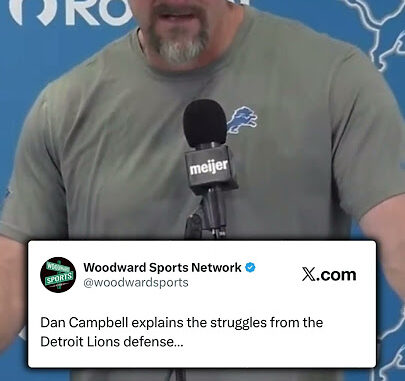
Detroit Lions head coach Dan Campbell has never been one to sugarcoat reality, and when addressing the recent struggles of his team’s defense, he stayed true to form. As the Lions continue to fight for consistency in a highly competitive NFL landscape, defensive lapses have emerged as a major talking point. Campbell’s explanation, however, paints a picture that goes beyond simple blame, focusing instead on context, growth, and accountability.
At the core of Campbell’s message is the acknowledgment that the Lions’ defense has not met its own standards. Missed assignments, poor tackling, and an inability to get off the field on third down have all contributed to extended drives and points conceded. Campbell openly admitted that those issues fall on everyone—from players failing to execute to coaches not putting them in the best positions to succeed. For him, the responsibility is collective, not individual.
One of the major factors Campbell highlighted is injuries. The Lions have been forced to shuffle personnel across the defensive line and secondary, disrupting chemistry and continuity. In the NFL, where timing and communication are everything, even small changes can lead to big breakdowns. Campbell explained that younger or less experienced players have been asked to step into critical roles earlier than expected, and while their effort is unquestionable, the learning curve has been steep.
Another key issue Campbell addressed is consistency. The Lions’ defense has shown flashes of being effective—forcing turnovers, generating pressure, and making timely stops—but those moments have not been sustained across four quarters. According to Campbell, this inconsistency often comes down to fundamentals. Missed tackles turn manageable gains into explosive plays, and poor eye discipline opens up passing lanes for opposing quarterbacks. These are fixable problems, but they require relentless attention to detail.
Campbell also pointed to the evolving nature of the NFL offense. Teams are faster, more creative, and more aggressive than ever, putting enormous stress on defenses. The Lions, he noted, have faced quarterbacks who are quick decision-makers and offenses that spread the field, making defensive execution even more challenging. While this doesn’t excuse the struggles, it does provide context for why even well-prepared defenses can look vulnerable at times.
Despite the criticism, Campbell made it clear that he has not lost faith in his defensive unit. He emphasized the effort and toughness his players bring every week, traits that align with the identity he’s building in Detroit. For Campbell, effort is non-negotiable, and while execution may falter, the willingness to compete has never been in question. That belief fuels his confidence that improvement is coming.
Looking ahead, Campbell stressed the importance of accountability and growth. Film sessions have become more intense, practices more focused, and expectations clearer. Veterans are being challenged to lead more vocally, while younger players are being pushed to learn faster and play freer. Campbell believes that adversity, while uncomfortable, can accelerate development if handled the right way.
In the end, Dan Campbell’s explanation of the Lions’ defensive struggles is rooted in honesty and perspective. He doesn’t deny the problems, but he also refuses to panic. Instead, he sees a defense still forming its identity, battling injuries, and learning hard lessons in real time. For a team with playoff aspirations, defensive improvement is essential—but under Campbell, the path forward is clear: own the mistakes, fix the fundamentals, and keep fighting.
Be the first to comment