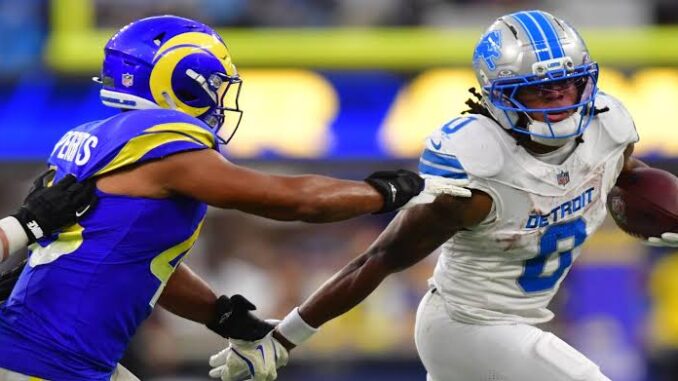
For much of the past two seasons, the Detroit Lions have been celebrated as one of the NFL’s best success stories. A franchise long defined by instability finally found an identity built on toughness, aggression and belief. Dan Campbell’s emotional leadership, Brad Holmes’ drafting, and a roster packed with buy-in turned the Lions from punchline to contender. But as this season has unfolded, the uncomfortable truth has emerged: the model that lifted Detroit up is now being exposed — and it’s costing them when it matters most.
At the heart of the Lions’ model is risk. Fourth-down aggression, heavy reliance on offensive line dominance, and a belief that physicality will eventually break opponents. When everything is healthy and execution is sharp, it looks brilliant. When cracks appear, it leaves very little margin for error. This season, those cracks have widened into structural flaws.
The most obvious issue is defensive fragility. Detroit’s philosophy has leaned heavily toward outscoring opponents rather than controlling games. Injuries in the secondary have made matters worse, but the problem runs deeper than personnel. The Lions struggle to generate consistent pressure without blitzing, and when quarterbacks are given time, the coverage simply doesn’t hold up. Elite teams exploit that relentlessly. The result is a defense that bends, breaks, and often puts the offense in constant catch-up mode.
Offensively, the system has become predictable. Jared Goff has been efficient and productive, but the Lions’ passing attack is heavily timing-based and dependent on clean pockets. When protection falters or defenses disrupt early reads, the offense stalls. The commitment to balance is admirable, yet the refusal to adapt mid-game has repeatedly hurt them. Too often, Detroit sticks to its script while opponents adjust, flipping momentum that never swings back.
Dan Campbell’s trademark aggressiveness also deserves scrutiny. The same fourth-down decisions that once energized the locker room are now under a harsher spotlight. Aggression without context becomes recklessness. There have been moments this season where taking points or trusting the defense would have been the smarter play — but the Lions doubled down on identity instead of situation. In tight games against playoff-caliber teams, those decisions have proven costly.
Roster construction plays a role as well. Detroit invested heavily in offense early in its rebuild, assuming the defense would grow organically. That growth has stalled. The lack of a true shutdown corner or a dominant edge rusher shows up most against elite competition. Depth, once a strength, has been stretched thin by injuries, revealing how top-heavy certain position groups actually are.
Perhaps the most damaging flaw, though, is emotional. The Lions thrive on momentum and belief. When things go right, they snowball. When adversity hits, the response hasn’t been as resilient. Missed tackles, penalties, and blown assignments compound quickly, suggesting a team that presses rather than resets. That’s not just execution — it’s a systemic issue tied to how the team handles pressure.
None of this means the Lions are bad. Far from it. They are still talented, dangerous, and capable of beating anyone on a given Sunday. But the difference between good and elite is adaptability. Right now, Detroit’s model is rigid. It demands perfection instead of allowing for adjustment, and the NFL rarely rewards that approach over a full season.
If the Lions are going to salvage this year and take the next step long-term, evolution is non-negotiable. Aggression must be paired with pragmatism. Identity must allow flexibility. Until then, the same model that rebuilt Detroit may continue to undermine its biggest ambitions — and that’s the most painful lesson of all.
Be the first to comment