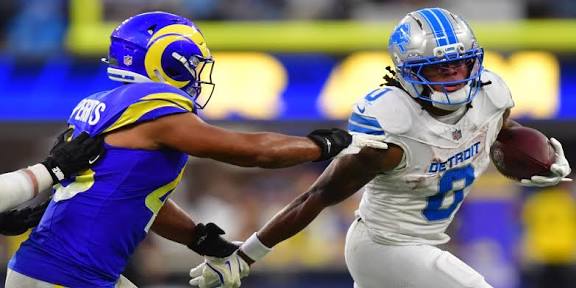
The Detroit Lions sold us a vision, and for a while, it worked. Draft smart. Build through the trenches. Trust the system. Develop players internally. Play fearless football rooted in toughness and belief. It was a refreshing antidote to decades of shortcuts and chaos, and it pushed the Lions from irrelevance to legitimacy faster than anyone expected. But football doesn’t reward loyalty to a model when the model stops evolving. And right now, the Lions’ blueprint looks less like a foundation and more like a limitation.
The warning signs have been there for weeks. Injuries mounted, depth was tested, and flexibility vanished. Instead of adapting, the Lions doubled down on what they believe they are — a team that wins with continuity and grit. That philosophy works when things are stable. It collapses when the margins shrink. The NFL doesn’t wait for teams to heal or catch up. It punishes hesitation.
Detroit’s commitment to building primarily through the draft has created a roster that is talented but thin. When starters go down, there isn’t enough proven experience behind them. Young players are being asked to grow up in real time, against elite competition, with postseason stakes. That’s not development — that’s survival. And it’s showing, especially on defense, where communication breakdowns and missed assignments have turned manageable drives into backbreaking scores.
Coaching, once the organization’s greatest strength, is also under scrutiny. Dan Campbell’s aggression energized this franchise and reshaped its identity. But aggression without precision becomes recklessness. Situational decisions that once felt bold now feel stubborn. Adjustments come late, if at all. The Lions still believe effort can solve everything. It can’t. Not at this level, not in December, not when opponents have months of film exposing your tendencies.
Offensively, the cracks are just as concerning. Jared Goff has been asked to operate in a system that depends on rhythm and protection, but injuries along the offensive line and a predictable approach have disrupted both. When the run game stalls, there’s no consistent counterpunch. The Lions’ refusal to meaningfully evolve their passing concepts has made life easier for defenses that know what’s coming and when it’s coming.
Perhaps the most damaging flaw in the Lions’ model is its resistance to outside reinforcement. While contenders add veterans to stabilize weaknesses, Detroit remains cautious, almost protective of its locker room culture. Chemistry matters, but so does urgency. Championships are not won by preserving ideals — they are won by solving problems. The Lions have problems, and they are trying to fix them with principles instead of players.
This season was supposed to be the leap. Instead, it feels like a reckoning. The Lions are still good, still competitive, still relevant — but relevance is not the goal anymore. Expectations have changed, and the organization hasn’t fully adjusted to that reality.
The model isn’t useless. It built this team. But it’s incomplete. Until the Lions accept that belief must be paired with adaptability, and culture must be supported by calculated risk, they will keep falling short of their potential. In the NFL, standing still is the fastest way to fall behind. And right now, Detroit is paying the price for refusing to move.
Be the first to comment