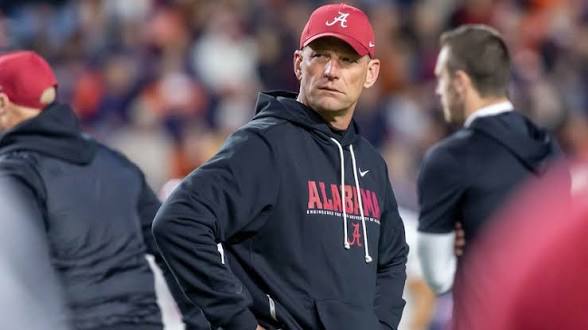
Expectations at University of Alabama are never ordinary. Success is measured in championships, playoff appearances, and dominance in the Southeastern Conference. That means when Kalen DeBoer took over after the legendary Nick Saban, he inherited both a powerhouse roster and the weight of impossible standards. By 2026, the question will not simply be whether Alabama is good, but whether the program is clearly moving forward under its new leader.
So, what would count as progress in 2026?
First, Alabama must look like a genuine national title contender again. That does not necessarily mean winning the championship, but it does mean entering November with playoff hopes fully alive and being feared by every opponent on the schedule. Fans expect Alabama to compete with the best, and progress would be measured by consistent top-level performances against elite teams. If the Crimson Tide are in the College Football Playoff conversation late in the season, that would signal real momentum.
Second, quarterback development will be crucial. Alabama has always thrived when elite quarterback play matched elite talent around it. DeBoer built his reputation as an offensive mind who gets the best from his signal-callers. By 2026, supporters will want to see a settled quarterback situation, efficient passing offense, and a unit capable of winning high-pressure games. If Alabama’s offense becomes explosive, balanced, and confident, that would be a major sign that DeBoer’s system is fully taking hold.
Another area of progress is recruiting and roster management. In modern college football, talent acquisition includes both high school recruiting and smart use of the transfer portal. Alabama cannot afford to fall behind rivals such as Georgia Bulldogs football, Texas Longhorns football, or LSU Tigers football. If the 2026 roster is deep, athletic, and clearly improving in key positions like offensive line and secondary, that would show DeBoer is building for sustained success rather than relying on inherited talent.
Defensively, Alabama supporters will expect toughness and discipline. Even if DeBoer is known more for offense, the identity of Alabama football has long included physical defense. Progress would mean fewer blown assignments, stronger tackling, and a defense capable of closing out games in the fourth quarter. Against top SEC opposition, that edge often decides championships.
Culture also matters. Replacing Saban was never going to be easy because he built a standard of accountability and relentless focus. By 2026, progress would mean Alabama looks united, resilient, and mentally sharp. Great teams respond after losses, improve weekly, and avoid distractions. If DeBoer creates a locker room with those traits, fans will believe the future is secure.
Finally, the simplest measure of progress is wins. At Alabama, nine wins may be respectable elsewhere, but not enough in Tuscaloosa. Ten wins with playoff contention would be solid progress. Eleven or more with an SEC title challenge would be a statement. Anything less than competing at the top will invite scrutiny.
In the end, progress for Alabama under Kalen DeBoer in 2026 is not about lowering standards. It is about proving the program can remain elite in a new era. If Alabama is winning big games, developing stars, recruiting at a high level, and competing for championships, then DeBoer will know he has truly moved the Crimson Tide forward.
Be the first to comment