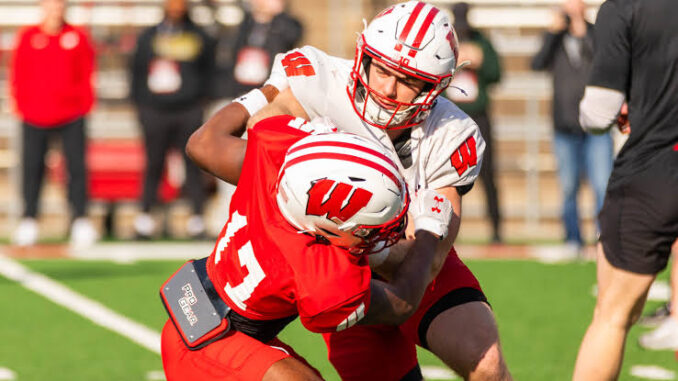
There is a growing sense of clarity around the identity of the Wisconsin Badgers football as they completed their sixth spring practice of 2026, with intensity, competition, and positional battles all beginning to take sharper shape under head coach Luke Fickell.
One of the most notable takeaways from the session was the continued emphasis on physicality at the line of scrimmage. Both the offensive and defensive fronts showed flashes of dominance, with the coaching staff clearly pushing for a more aggressive, trench-oriented style. The defensive line, in particular, appeared disruptive, consistently generating pressure during team drills. This aligns with Fickell’s long-standing philosophy of building from the inside out, and it’s becoming evident that this unit could be a strength heading into the fall.
At quarterback, the competition remains one of the most intriguing storylines. Repetition distribution suggests that the coaching staff is still evaluating multiple options rather than settling on a clear starter. Decision-making and consistency were key points of focus during practice, with quarterbacks alternating between impressive downfield throws and moments of hesitation under pressure. While no definitive leader has emerged, the group as a whole appears more comfortable within the system compared to earlier sessions.
The running back room also provided encouraging signs. There was a noticeable balance between power running and explosiveness, with backs finding success both between the tackles and on outside runs. This versatility could prove crucial as Wisconsin looks to diversify its offensive approach. Additionally, pass protection drills highlighted the staff’s demand for complete backs who can contribute in multiple facets of the game.
At wide receiver, progression continues to be steady rather than spectacular. Route running looked cleaner, and there were fewer dropped passes compared to earlier practices. However, the group is still searching for a true standout playmaker who can consistently stretch defenses. That said, chemistry between quarterbacks and receivers is improving, which is often one of the slower-developing aspects of spring football.
Defensively, the secondary showed flashes of cohesion and communication. Coverage schemes appeared tighter, and there was a noticeable improvement in positioning during passing drills. Interceptions and pass breakups during scrimmage situations highlighted a unit that is gaining confidence. If this trend continues, the Badgers could field a more opportunistic defense than in previous seasons.
Another key observation was the tempo of practice. The coaching staff maintained a brisk pace, minimizing downtime and maximizing repetitions. This approach not only builds conditioning but also sharpens mental focus, as players are required to quickly process instructions and execute under pressure. It’s a clear indication that the program is prioritizing discipline and game-like intensity.
Special teams, often an overlooked aspect during spring, also received attention. Kicking drills and coverage units were integrated into the session, emphasizing the importance of field position and execution in all phases of the game. Consistency in this area could provide a significant edge in tightly contested matchups.
Overall, the sixth spring practice painted a picture of a team steadily progressing toward cohesion. While questions remain—particularly at quarterback and wide receiver—the foundation being laid is evident. Physicality, competition, and attention to detail are defining this stage of preparation.
As spring continues, the focus will likely shift toward refining roles and identifying leaders. For now, the Badgers appear to be on a promising trajectory, with each practice bringing greater clarity to what this team could become in the 2026 season.
Be the first to comment