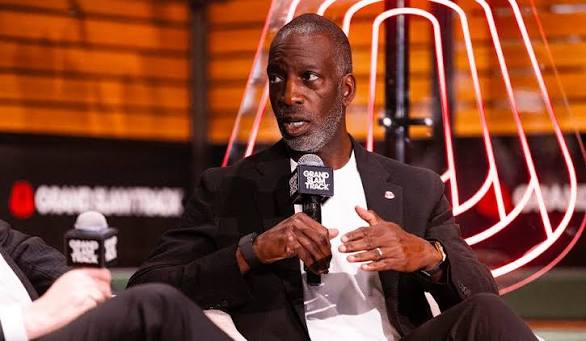
A court filing has raised serious allegations against Michael Johnson, the founder of Grand Slam Track, claiming he paid himself $500,000 without proper board approval or justification while the struggling league was facing severe financial problems. The claims have surfaced as part of ongoing bankruptcy proceedings surrounding the athletics venture, which collapsed after its inaugural season and left athletes, vendors, and partners owed millions of dollars.
According to legal documents filed in a U.S. bankruptcy court, several creditors argue that Johnson authorized the payment to himself in June 2025, at a time when the organization was already experiencing serious financial distress. The filing alleges that the payment was made without the consent of the board and prioritized Johnson’s personal repayment ahead of athletes and other creditors who were still waiting for compensation.
Grand Slam Track was launched with the ambitious goal of reshaping professional track and field by hosting a series of high-profile meets featuring some of the world’s top athletes. The league promised large prize purses and regular televised events, hoping to generate sustained interest in athletics outside major championships such as the Olympics and World Championships. However, despite attracting several well-known competitors, the project quickly ran into financial trouble.
The inaugural season included three meets in locations such as Jamaica, Miami, and Philadelphia, but a planned fourth event in Los Angeles was cancelled after the organization ran out of funds. Reports later revealed that the league owed millions of dollars in prize money and appearance fees to athletes who had already competed in the earlier events.
The recent court filing was brought forward by vendors who claim they are owed substantial sums for services provided during the league’s short-lived season. These creditors are now seeking permission from the bankruptcy court to pursue legal action against Johnson and the league’s primary investor, Winners Alliance. The vendors argue that Johnson’s alleged payment to himself represents an example of insider preference, where a company executive benefits financially while other creditors remain unpaid.
Lawyers representing the creditors claim the payment was made just days before the league cancelled its final scheduled meet. They argue that Johnson knew the organization was in a precarious financial position and still chose to reimburse himself before resolving the outstanding obligations to athletes and suppliers. According to the filing, there is allegedly no record of board minutes or formal authorization approving the payment.
However, representatives of Grand Slam Track have strongly denied the allegations. In response to the filing, a spokesperson stated that the payment was not improper but rather a partial reimbursement for funds Johnson had personally invested into the project to keep the league operating. According to the league’s defense, Johnson had advanced millions of dollars to cover operational costs such as athlete travel, accommodations, and event logistics. They argue that critics are ignoring the fact that the founder himself suffered significant financial losses as the project collapsed.
Financial documents tied to the bankruptcy suggest that the league accumulated tens of millions of dollars in liabilities while generating relatively little revenue during its debut season. At the time of its bankruptcy filing, Grand Slam Track reportedly had debts ranging between $10 million and $50 million and only minimal cash reserves.
The legal dispute now adds another layer of controversy to what was once promoted as a groundbreaking initiative for athletics. While the final outcome of the court proceedings remains uncertain, the case could have significant implications for Johnson’s reputation and for the future of any attempts to revive the Grand Slam Track concept.
For now, the allegations remain unproven, and the bankruptcy court will ultimately determine whether the payment violated financial rules or fiduciary duties owed to the league’s creditors. Meanwhile, athletes, vendors, and investors continue to await clarity on how much of the money owed to them can eventually be recovered.
Be the first to comment