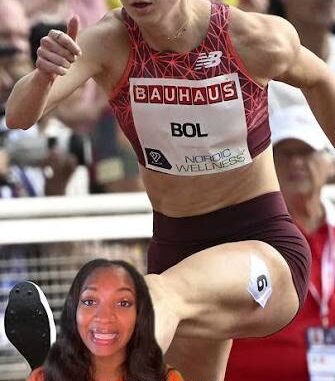
Femke Bol has long been the queen of the long hurdles and a dominant force in the 400m, but now she is edging into a conversation that could redefine her legacy: the 800m. For an athlete already boasting Olympic medals, multiple European titles and world-leading relay performances, even whispering her name alongside two-lap specialists signals something intriguing. Bol is not simply experimenting; she is hinting at expansion.
The Dutch star’s credentials over one lap are unquestioned. With a 400m hurdles personal best of 51.45 seconds and flat 400m times comfortably under 50 seconds, Bol possesses the rare blend of speed endurance and rhythm that makes coaches dream about the 800m. Historically, athletes with strong 400m backgrounds have transitioned successfully to two laps. Jarmila Kratochvílová famously ran 1:53.28 in 1983 after excelling at 400m, a world record that still stands more than 40 years later. The link between the events is real.
For Bol, the appeal is obvious. The 800m demands controlled aggression, tactical patience and the ability to close hard in the final 200m. Few in global athletics close better than Bol. Time and again in championship finals and Diamond League meetings, she has powered through the home straight with a stride that refuses to break. That finishing strength, built from years of lactate-heavy 400m training, could be a potent weapon over two laps.
Physiologically, the transition is challenging but not unrealistic. The 800m is often described as roughly 60 percent aerobic and 40 percent anaerobic. Bol’s current programme heavily emphasises anaerobic capacity for the hurdles, but her relay duties and off-season endurance work suggest a base strong enough to stretch further. Adding structured aerobic mileage — perhaps increasing weekly volume by 10 to 15 percent — could allow her to sustain a 57-second opening lap without catastrophic fade.
There is also a strategic element at play. The women’s 800m landscape is competitive but less historically deep than the 400m hurdles, where Bol regularly battles the likes of Sydney McLaughlin-Levrone. Entering the 800m conversation offers fresh narrative and opportunity. Championship schedules could even allow a calculated double, depending on the programme. The prospect of a 400m hurdles–800m double would be audacious, but elite athletes are often driven by such challenges.
Yet caution is essential. The 800m punishes miscalculation more brutally than almost any other track event. Go out two seconds too fast and the final 100m becomes survival. Sit too far back and the race is gone before the kick begins. Bol would need race reps — not just one experimental outing, but a season’s worth of tactical learning. Even seasoned 400m converts often require a year or two to master positioning and pacing.
Still, the mere idea is electrifying. Athletics thrives on bold moves, on champions stepping outside comfort zones. When Bol edges into the 800m chat, she is not abandoning her domain; she is expanding it. At 26 years old, she is entering what many consider middle-distance prime. If she were to break 1:58 in her first serious attempt, the conversation would shift from curiosity to genuine threat.
Whether this becomes a full-time shift or a selective experiment, one thing is certain: Femke Bol’s name now lingers in a new arena. And when an athlete of her calibre enters the chat, the sport pays attention.
Be the first to comment