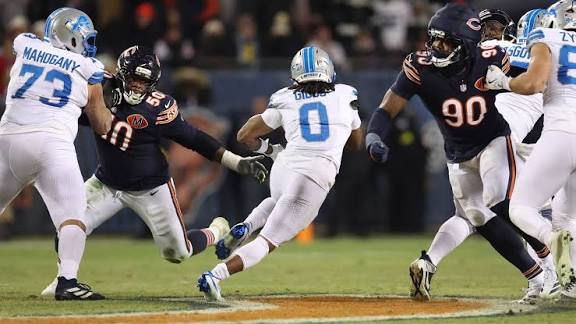
The Chicago Bears’ defense didn’t shy away from responsibility after Sunday’s frustrating 19–16 loss to the Detroit Lions, openly acknowledging that a slow start and missed opportunities ultimately cost the team a winnable divisional game. While the Bears showed resilience late, the early lapses proved too much to overcome, leaving players and coaches pointing inward rather than outward.
Coming into the matchup, Chicago knew the importance of starting fast against a Lions offense that thrives on rhythm and confidence. Instead, the Bears defense struggled to find its footing in the opening quarter, allowing Detroit to control possession, dictate tempo, and build early momentum. That sluggish beginning set the tone for a game that required Chicago to play catch-up rather than impose its will.
Detroit capitalized on the Bears’ early flatness by sustaining drives and consistently flipping field position. While the Lions didn’t light up the scoreboard, they did enough to stay ahead, leaning on methodical execution and timely plays. For Chicago’s defense, the issue wasn’t a lack of effort but a lack of urgency early on — something players were quick to admit afterward.
The Bears tightened up as the game progressed, particularly in the second half, when adjustments led to improved pressure and better coverage. Chicago forced punts, limited explosive plays, and gave the offense opportunities to close the gap. However, football games are often decided in the margins, and the points surrendered early loomed large when the final whistle blew.
One of the key issues was third-down defense. Detroit consistently found ways to extend drives in critical moments, wearing down the Bears and keeping their own defense rested. Missed tackles and slight miscommunications allowed short gains to turn into chain-moving plays — the kind of mistakes that don’t always jump out on the stat sheet but prove costly over 60 minutes.
Red-zone execution was another area where the Bears felt they could have done more. Holding the Lions to field goals rather than touchdowns kept Chicago within striking distance, but the defense acknowledged that even stronger resistance inside the 20 could have flipped the outcome. Against a divisional opponent, every stop matters.
Despite the disappointment, there were positives to build on. The Bears’ defensive front showed flashes of dominance late, generating pressure and forcing hurried throws. The secondary responded well after early challenges, tightening coverage and limiting Detroit’s downfield success. Still, those improvements came after the Lions had already established control.
Head coach and players alike emphasized accountability in the aftermath, stressing that no single unit was to blame. However, the defense made it clear that it holds itself to a high standard — one that wasn’t fully met on Sunday. The consensus was simple: championship-level defenses don’t need time to wake up.
As the Bears look ahead, the lesson from the loss is clear. Slow starts against disciplined teams like Detroit leave little room for error. The defense believes it can be better, faster, and more consistent from the opening snap — and it knows that improvement starts with honest self-assessment.
Sunday’s 19–16 defeat was a reminder that in the NFL, games are rarely lost in one moment. For the Bears, it was the accumulation of early shortcomings that ultimately made the difference.
Be the first to comment